
The disconnect is real and it's not your fault
Touch avoidance doesn't start from nowhere. It shows up after trauma, during high stress, in the aftermath of relationship conflict, or sometimes just because your nervous system got tired and stopped asking for contact. When that happens, the idea of someone else's hands on your body can feel intrusive, suffocating, or completely numb. Your own touch might feel strange too.
Here's what I see in practice: people assume this means they've lost their capacity for pleasure. They haven't. What's happened is their nervous system has gone into protection mode, and pleasure temporarily takes a backseat to safety. The good news is that you can rebuild this. Lemon vibrators and clitoral vibrators designed with gentleness in mind are actually one of the most effective ways to rewire that connection because they let you control every variable.
Why lemon vibrators work differently when touch feels overwhelming
When you're disconnected from physical sensation, external stimulation from a partner can feel demanding or triggering. A lemon vibrator is different. You decide the speed, the pressure, the exact angle, and the moment you stop. There's no negotiation, no performance, no reading another person's expectations. That autonomy is therapeutic.
Lemon sucker vibrators and other clitoral vibrators also provide consistent, predictable stimulation. Your brain doesn't have to work to interpret variable pressure or rhythm. Instead, you can focus on what's happening in your body without the cognitive load of managing someone else's touch. This clarity is where reconnection begins.
The suction-based design of a lemon vibrator is particularly useful here because it doesn't require the same kind of directness as other vibration patterns. You can ease in gradually, adjust the intensity on the fly, and the sensation feels novel enough to bypass old neural pathways that might be associated with avoidance.
Starting from zero: how to rebuild baseline sensation
If touch feels completely foreign right now, you're not restarting from scratch. You're retraining your nervous system to register pleasure as safe again. Here's the sequence I recommend.
Week one: exploration without pressure. Spend time with your lemon vibrator turned off. Hold it. Look at it. Notice the weight, the material, the shape. This might sound basic, but your brain needs to move through "this is a foreign object" to "this is something I choose." Five to ten minutes is enough.
Week two: sensation at lowest intensity. Turn the lemon vibrator on to its gentlest setting (usually patterns 1-3) and let it hover near the outer edge of your labia or on your inner thigh. Not on the clitoris yet. You're teaching your nervous system that vibration equals safety, not demand. Do this for five to ten minutes, a few times a week.
Week three and beyond: slow migration toward the clitoris. Only when the outer areas feel normal should you move the vibrator closer to your clitoris. Use the lowest setting. Let the sensation build gradually. If at any point it feels overwhelming, stop and return to the outer areas. There's no timeline here. Some people need two weeks at each stage. Others need two months.
The role of breathing and grounding
Disconnection from touch often comes with disconnection from your body in general. When you're using a lemon vibrator to rebuild that connection, breathing and grounding techniques matter as much as the device itself.
Before you start, spend two minutes on a simple box breath: inhale for four counts, hold for four, exhale for four, hold for four. This activates your parasympathetic nervous system and signals to your brain that this is a safe activity, not another demand on your body.
During the session, keep one hand free to touch other parts of your body. Your thigh, your belly, your collarbone. This dual awareness helps you stay present. You're not just receiving sensation from the vibrator. You're actively participating in your own touch.
After the session, give yourself five minutes of stillness. No jumping up to do something else. Your nervous system has just learned that pleasure and safety can coexist. That learning needs time to settle.
Rebuilding intimacy with a partner
Eventually, you might want to rebuild touch with a partner. This is where solo exploration with a lemon vibrator becomes foundational. When you've spent weeks or months learning that vibration and pleasure are safe, you're building evidence that contradicts the avoidance response.
If you have a partner, don't skip the conversation. Tell them what you're doing and why. "I'm using a lemon vibrator to help my nervous system learn that touch can be safe again. I'm not avoiding you. I'm preparing myself to come back to you." Partners who understand the nervous system piece usually become your strongest allies in this process.
When you're ready to include a partner, start small. Maybe they sit nearby while you use your lemon vibrator. There's no touching, no pressure. Just presence. Gradually, over weeks, that might expand to them holding your hand, or being in the same bed, or eventually, their touch replacing the vibrator.
This progression isn't slow because you're broken. It's slow because you're rebuilding trust in your own body. That takes time and consistency.
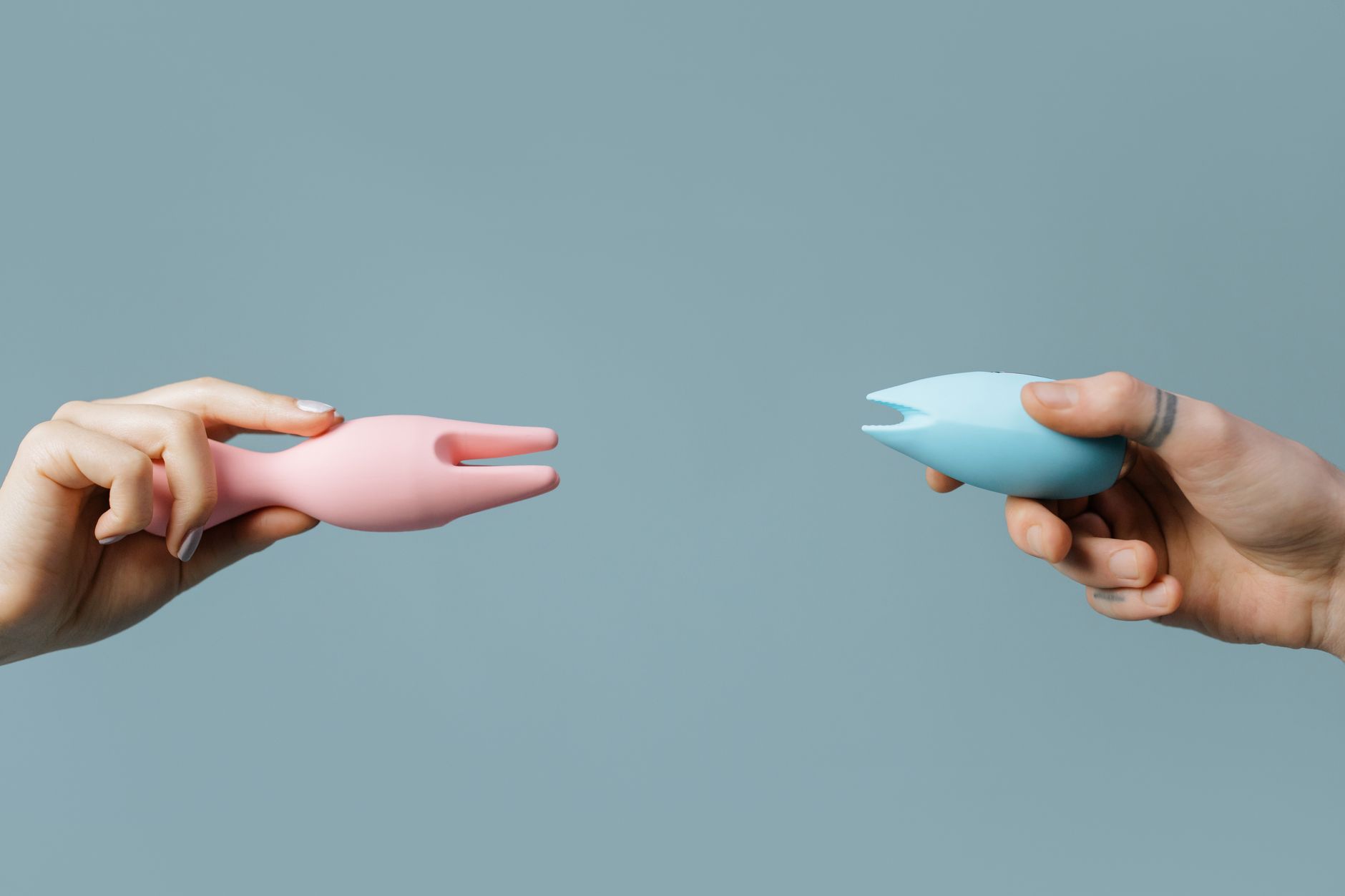
Photo by cottonbro studio on Pexels
When sensation starts to come back
You'll notice the shift gradually. The vibrator stops feeling like a foreign object and starts feeling like a tool. Your breathing changes. You might find yourself moving your hips or tightening muscles you'd forgotten you had. These are all signs that your nervous system is waking up.
Some people report that sensation becomes more intense. Others say it becomes more nuanced. You might notice that certain patterns trigger different responses, or that your body has preferences you weren't aware of before. This variation is normal and actually a good sign. Your nervous system is becoming more sophisticated in how it processes pleasure.
This is also when you might consider exploring different lemon vibrator settings and patterns to see what matches your evolving capacity. The settings that felt overwhelming in week two might feel perfect in week six.
The nervous system piece nobody talks about
Disconnection from touch is often a symptom of a nervous system in protection mode. You can use lemon vibrators perfectly and still struggle if you're not addressing the underlying activation. This means working on the things that made you need distance in the first place.
For some people, that's trauma processing. For others, it's stress management, better sleep, or reduced caffeine. Some folks need therapy to understand why they withdrew. If you've experienced relationship pain or feel unsafe, rebuilding after relational hurt is work worth doing alongside the physical exploration.
A lemon vibrator is a powerful tool, but it's not a replacement for addressing what caused the disconnection in the first place. You need both.
Using lemon clitoral vibrators as part of a larger reconnection practice
If you want to accelerate the process, combine your lemon vibrator work with sensate focus exercises. These are structured touch practices designed to rebuild body awareness without the pressure of performance or orgasm. You spend time noticing sensation rather than chasing it. Lemon vibrators fit beautifully into this framework because they let you practice the "noticing" part on your own first.
You might also explore other ways of reconnecting with your body: yoga, massage, warm baths, or simply spending time naked and still. The vibrator is one piece. The bigger work is teaching your nervous system that your body is a place of curiosity and safety, not a source of threat.
The fact that you're thinking about reconnection at all is important. It means you haven't given up on pleasure or intimacy. You're just taking the long way around, and that long way around often leads to the deepest, most resilient pleasure.
Frequently asked questions
How long does it usually take to rebuild sensation after feeling disconnected from touch?
There's no universal timeline. I've worked with clients who felt reconnected in four to six weeks, and others who needed three to six months. The speed depends on what caused the disconnection, how long it lasted, and how consistently you practice. Think of it like rebuilding trust with an old friend. The more you show up, the faster the relationship repairs. Consistency matters more than intensity.
Can I use a lemon vibrator if I have anxiety about my body?
Yes, actually. The key is starting from complete safety and autonomy. You control the timing, speed, and pressure. There's no judgment, no performance, and no outside expectation. For many people with body anxiety, solo exploration with a lemon vibrator is less triggering than partner touch because it removes the evaluation piece. Start slow, be patient with yourself, and remember that nervousness is different from danger.
Is it normal to not feel anything when I first use a lemon vibrator?
Completely normal. If your nervous system has been in protection mode, numbness can persist even when you're doing everything right. This is called sensory dissociation, and it typically fades with consistent, low-pressure exposure. Keep using the vibrator at the lowest settings for a few weeks before assuming it's not working. Your body often needs time to trust that sensation is safe again.
Should I tell my partner I'm using a lemon vibrator to rebuild connection?
I recommend it. Being honest about what you're working on builds trust and keeps your partner from misinterpreting what's happening. You might say something like, "I'm using this tool to help my body learn to feel safe with pleasure again. I'm not pulling away from you. I'm preparing myself to come back to you fully." Partners who understand the process usually become more patient and supportive.
What if I start to feel triggered or anxious while using the vibrator?
Stop immediately. Pushing through triggers is counterproductive. Your nervous system is trying to tell you something. Go back to the earlier, gentler stages next time. And consider whether you need to work with a trauma-informed therapist alongside this physical practice. Some disconnection from touch requires professional support, not just a lemon vibrator and patience.
Can I use lemon vibrators if I'm on antidepressants or anti-anxiety medication?
Yes. Some medications can affect sensation or libido, but that doesn't mean lemon vibrators won't help. If anything, the gentle, controllable stimulation they provide can be especially useful when medication has dulled your baseline sensation. If you notice significant numbness despite consistent practice, talk to your prescriber about whether a medication adjustment might help. There are also specific approaches to rebuilding sensation when medication affects pleasure.
The point
Disconnection from touch is temporary, even when it feels permanent. Your body hasn't forgotten how to feel pleasure. Your nervous system just needed permission to step back. A lemon vibrator gives you that permission in a format that feels safe, controllable, and entirely yours. Use it to rebuild that connection slowly, patiently, and without pressure. The pleasure you're rebuilding will be grounded in genuine safety, and that's stronger than anything rushed.
If you're struggling with touch avoidance or feel stuck in the reconnection process, reaching out for support can help. We're here if you need to talk through what's happening.