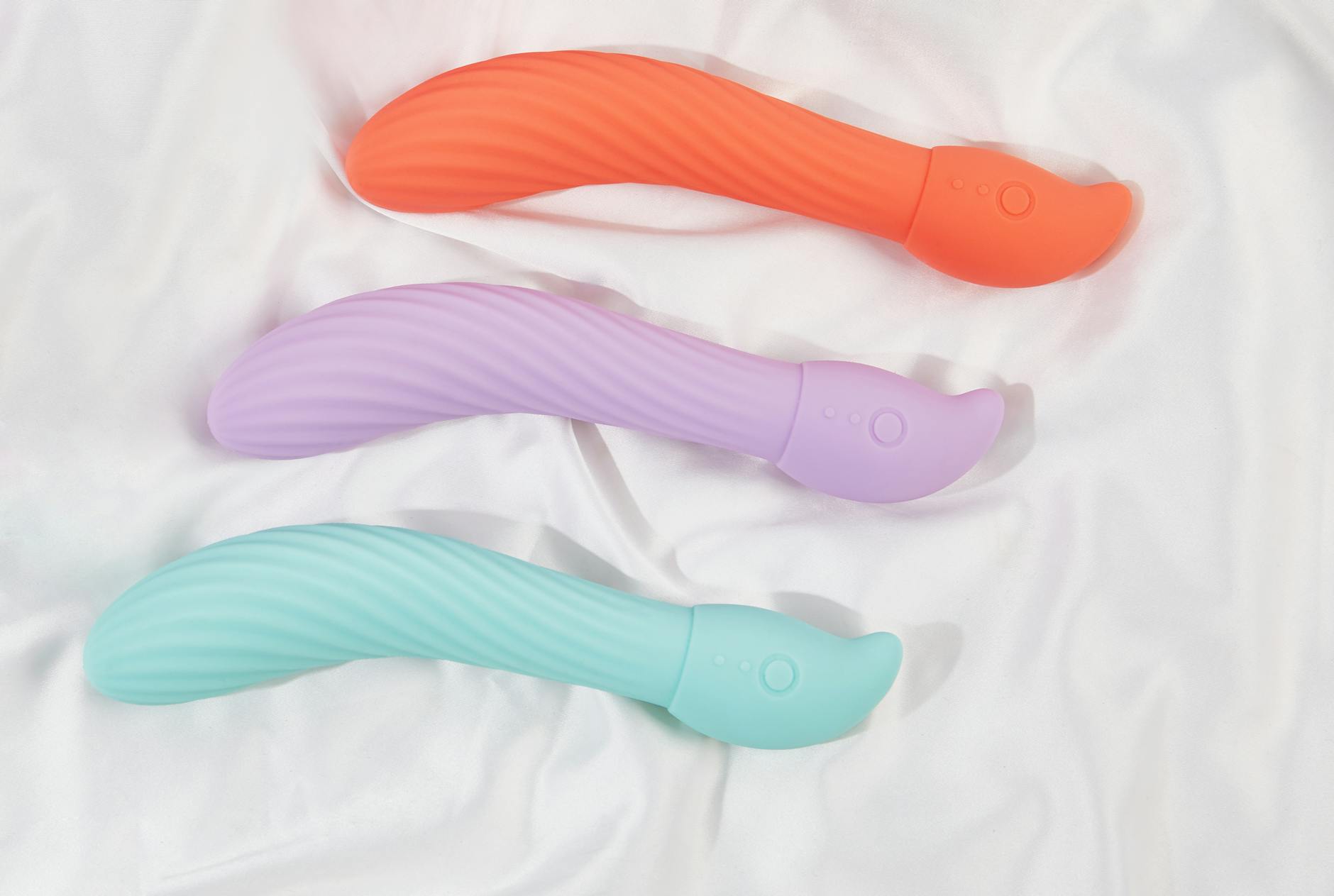
Let's name what's actually happening
When a long-term relationship ends, your body forgets faster than your mind does. Sex shifts from a shared ritual to a solo act, and the nervous system doesn't always know how to make that translation. Touch starved. Disconnected. Sometimes numb in ways that have nothing to do with sensation and everything to do with safety.
Rebonding with your own pleasure after a breakup isn't about "getting back out there" or proving anything. It's about retraining your nervous system to trust sensation on your own terms again. And here's the thing: not all vibrators do that equally well.
Why friction vibrators can stall your recovery
Traditional vibrators (the wand or bullet style) rely on direct, sustained stimulation. They work by repetitive contact, which requires your tissue to tolerate increasing friction. After a breakup, many people notice their clitoris feels more sensitive to pressure, more protective. The tissue is literally guarding itself.
When you use a friction vibrator during that phase, you're asking your body to accept invasive sensation at the exact moment it's relearning consent on solo terms. It can feel clinical. Obligatory. Sometimes painfully intense.
Air-suction vibrators like the lemon clitoral vibrator work differently. Instead of friction, they use gentle suction and pulsation patterns. The sensation isn't applied directly to the tissue. It's created around it, which feels safer to a nervous system that's been in protection mode.
This isn't theoretical. In my practice, clients report that suction-based stimulation feels significantly less triggering during early-stage solo pleasure recovery than traditional vibrators. The reason: suction doesn't require the same level of physical vulnerability that friction does.
The neuroscience of recovery (the short version)
Your clitoris has over 8,000 nerve endings, but not all of them fire at once. During partnership, arousal builds through a predictable social and physical rhythm. Your brain knows what's coming. The nervous system preps.
After a breakup, that neural pathway goes silent. When you start exploring again, your brain is literally rebuilding the arousal map from scratch. It's hypervigilant. One signal feels like a threat.
Air-suction stimulation works with this hypervigilance, not against it. The patterns feel novel but contained. There's no pressure building. No relentless friction. Just a rhythmic, gentle sensation that your nervous system can say yes to without bracing.
That's why recovery with a lemon vibrator often feels faster than with friction-based toys. You're not fighting sensation. You're coaxing it.
The practical advantage: pattern control
Most quality clitoral vibrators designed with suction technology (including Hello Nancy's Lem) offer multiple intensity levels and distinct patterns. This matters more during recovery than you'd think.
With a friction vibrator, you essentially have one job: find the right speed and hold it there. The experience is linear. You're chasing intensity in a straight line.
With air-suction patterns, you can explore. Start at level 1, pattern 1. Gentle. Almost ticklish. Your nervous system experiments, learns the shape of pleasure again without the stakes.
Many clients find that varying patterns during recovery prevents the numbing effect that single-speed friction can create. Your tissue doesn't adapt to one repetitive stimulus. Instead, each session teaches your clitoris something different.
Rebuilding solo pleasure: the actual steps
Start low and stay there longer than feels intuitive. Set a lemon vibrator to pattern 1, level 1. Give it 8–10 minutes. Your body needs time to remember that touch can be safe.
Don't chase orgasm. During early recovery, the goal isn't climax. It's sensation. It's relearning the shape of arousal before the endpoint. This sounds abstract until you try it, and then it clicks. No destination means no failure.
Use exploration sessions, not performance sessions. Schedule 30 minutes. No finish line. Some people need two weeks of this before sensation returns reliably. Some need two months. Both are normal.
Vary patterns, not intensity. Once you've found a comfortable level, move between patterns rather than chasing higher speeds. This keeps your nervous system engaged without pushing it.
Notice the emotional texture. Recovery after a relationship often layers grief with reclaimed autonomy. Sometimes that feels good. Sometimes it feels hollow. Both are data. Your nervous system is processing both at once.
Why texture and design matter during recovery
During a relationship, you rarely think about a toy's ergonomics. Someone else is present. You're in response mode.
During solo recovery, every detail becomes meaningful. The weight in your hand. How it feels to hold something just for yourself. The durability signals "I'm worth investing in." The design signals "this was made with thought."
Silicone clitoral vibrators like the Lem have a specific advantage here: they're built for extended comfort. No sharp angles. No pressure points that create tension after 20 minutes. The surface is warm to the touch, not clinical or cold.
That sensory context matters for recovery. You're retraining pleasure pathways while also resourcing yourself emotionally. The toy becomes a small act of self-respect each time you pick it up.
When to expect shifts
Most people notice reliable sensation returning within 2–4 weeks of consistent solo exploration with an air-suction vibrator. That's not magic. That's nervous system retraining, and it's measurable.
Some notice faster. Others take longer, especially if the relationship involved sexual patterns that need unlearning. Both timelines are fine. Recovery isn't linear, and your timeline is yours alone.
What shouldn't happen: persistent numbness, increased pain, or sensation that feels unsafe. If those continue past week three, consider checking in with a pelvic floor specialist or therapist. Recovery shouldn't require pushing through pain.
The larger permission this creates
Here's what I've noticed in my practice: when someone rebuilds solo pleasure intentionally after a breakup, they stop waiting for permission from a partner to feel good. Not in a petulant way. In a grounded way.
You learn that sensation is portable. That your nervous system can learn to trust itself. That pleasure is a skill you can practice, refine, and own. Solo.
Then, if you choose partnership again, you enter it as someone who already knows their own body. You're not learning from scratch alongside a partner. You're bringing expertise. That changes the whole dynamic of intimacy.
A lemon vibrator during recovery isn't just a tool for sensation. It's evidence that you're worth resourcing. That your pleasure matters on its own terms. Start there, and everything else builds.
FAQs: Pleasure recovery after breakup
How long does it take to feel sensation again after a breakup?
Most people report noticeable shifts within 2–4 weeks of consistent solo exploration, but recovery varies widely based on how long the relationship lasted, whether there was trauma involved, and your overall nervous system state. If you've been through a difficult breakup or experienced sexual trauma in the relationship, recovery might take 8–12 weeks or longer. That's not failure. That's your body taking the time it needs to feel safe again. Patience accelerates the process more than intensity does.
Why do traditional vibrators feel painful during recovery?
After a breakup, many people experience temporary hypersensitivity or numbness in the clitoris. Both are protective responses from your nervous system. Traditional friction vibrators apply direct pressure to already-guarded tissue, which can feel invasive or painful. Air-suction vibrators create sensation around the tissue rather than against it, which feels less threatening to a nervous system in protection mode. If pain persists beyond week three with any toy, check with a healthcare provider to rule out physical causes.
Can I use a lemon vibrator if I'm not sure I want to explore solo play?
Yes. You don't have to use it right away. Many people benefit from just holding one, looking at it, letting it be present in their recovery space. There's no timeline for solo pleasure exploration after a breakup. Some people are ready immediately. Others need weeks of emotional processing first. Having a tool available when you're ready is enough. The permission to not use it yet matters as much as the permission to use it later.
Should I tell my therapist I'm using a vibrator during recovery?
If you have a therapist, yes. Not because there's shame, but because it's relevant data about your nervous system's healing. A good therapist will recognize solo pleasure exploration as part of healthy recovery and can help you process the emotions that come up. If your therapist responds with discomfort or judgment, that's information about whether they're the right fit for your recovery journey.
What if I still feel numb after four weeks of using a clitoral vibrator?
Persistent numbness after a breakup can signal several things: your nervous system needs more time, there's unprocessed grief or trauma, medication side effects, or occasionally a physical condition like reduced clitoral blood flow. If sensation hasn't shifted at all by week four, it's worth scheduling a check-in with a pelvic floor physical therapist or gynecologist. Sometimes numbness is emotional. Sometimes it's physical. Usually it's both, and a professional can help you untangle which is which.
Can using a vibrator help me process the breakup itself?
Indirectly, yes. Solo pleasure practice during recovery isn't therapy, but it does signal to your nervous system that your body is still worthy of attention and care. Many people find that reconnecting with solo sensation softens some of the shame or self-abandonment that breakups create. That's not the same as processing the relationship grief, which usually requires actual therapy, journaling, or time with people you trust. Think of solo pleasure as one strand of recovery, not the whole tapestry.
Moving forward
Breakups disrupt more than just partnership. They disrupt your nervous system's map of safety, pleasure, and touch. Rebuilding that map intentionally, with tools designed for gentleness rather than performance, matters.
A lemon clitoral vibrator during recovery does one simple thing: it teaches your nervous system that sensation can be safe on your own terms. Everything else builds from there. When you're ready to explore, Hello Nancy's air-suction designs are built for exactly this kind of reclamation work. Start low. Stay curious. Trust the process.