The thing nobody tells you about antidepressants and sex
Your antidepressant is working. That's not the problem. The problem is that the same neurochemical smoothing that steadies your mood also mutes your sensation, and nobody mentions this when you're signing the consent form. You're not broken. Your nervous system is just operating at a lower volume.
Here's what I see in my practice: people stay on SSRIs (selective serotonin reuptake inhibitors) for years because they work for depression and anxiety. Then they notice sex feels distant. Touch doesn't land the same way. Orgasms either take forever or feel thin when they arrive. Many people assume they've lost something permanently. Most haven't.
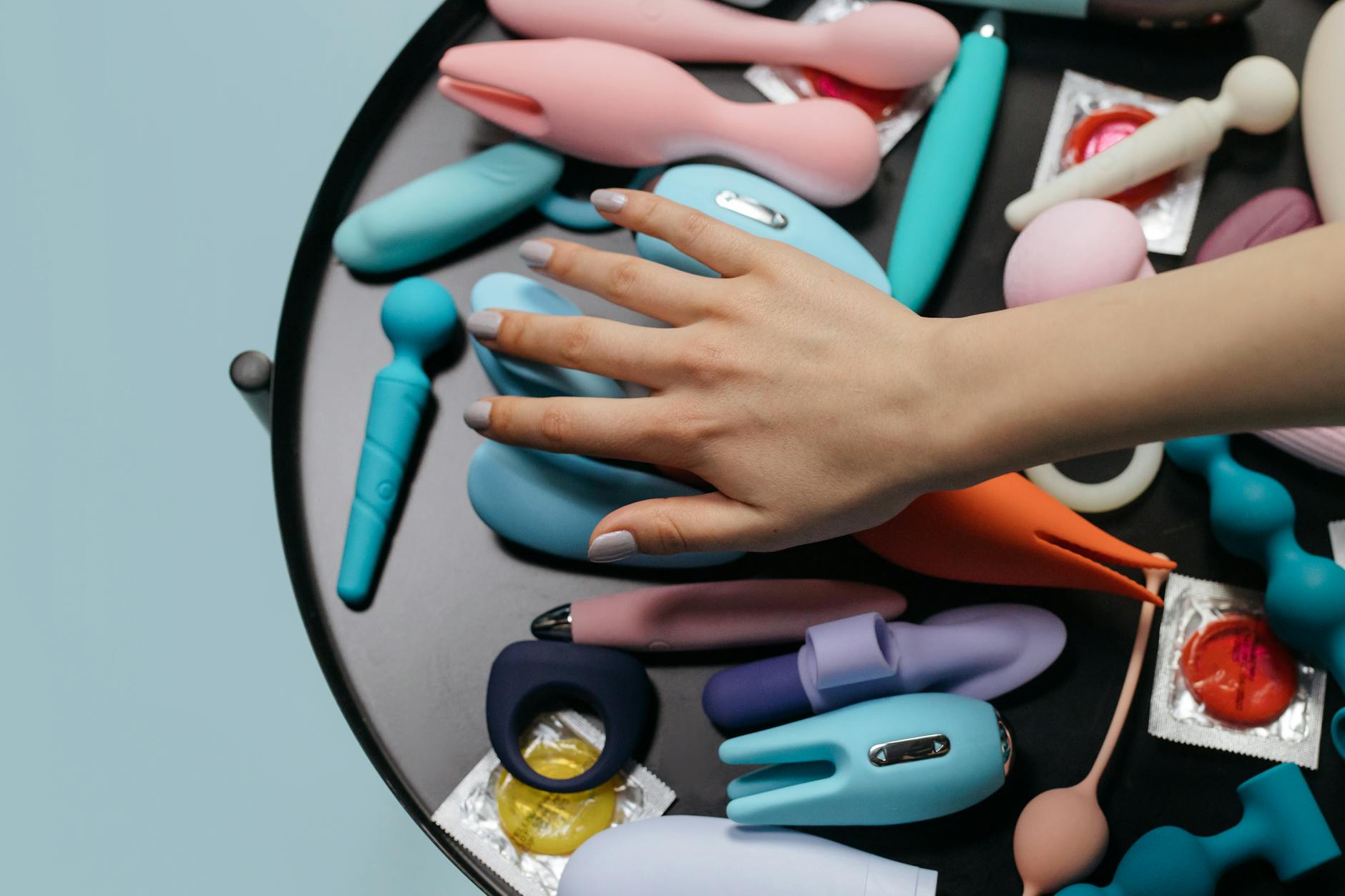
I'm Evelyn, and I work with couples navigating exactly this kind of transition. The good news is that lemon clitoral vibrators, particularly air-suction styles like the ones from Hallo Nancy Lem, often work where conventional vibrators don't. Understanding why matters more than just buying something and hoping.
How antidepressants actually affect sensation
SSRIs work by keeping serotonin in your synaptic space longer. Serotonin stabilizes mood, but it also dampens the signal-to-noise ratio in your nervous system. That's partly why you feel calmer. It's also why a touch that used to send a spark might feel muffled.
This happens in layers:
Neurologically, your brain's arousal response slows. The cascade of activation that used to build quickly now unfolds more gradually. Some people report needing 20 or 30 minutes of stimulation where they used to need 5.
Vasocularly, blood flow to erogenous tissues can lag. Arousal depends on engorgement. If blood is moving more slowly, the tissues aren't as receptive, and sensation feels flatlined.
Psychologically, the combination of emotional blunting and physical numbness can create a cycle where your brain doesn't expect pleasure, so your body doesn't look for it. Breaking that feedback loop is half the work.
The worst part? This is often dose-dependent and time-dependent. Higher doses hit harder. And sometimes the effect stabilizes after a few months. Sometimes it doesn't.
Why lemon clitoral vibrators work differently
Not all vibrators are equal on antidepressants. A traditional buzz vibrator relies on direct friction and high-frequency stimulation. When your nervous system is dampened, you need more intensity to feel anything at all. That intensity becomes uncomfortable quickly.
Lemon sucker technology works differently. Air-suction vibrators like the Lem create a gentle seal and rhythmic suction that stimulates the clitoris without relying on buzz alone. Here's why this matters on antidepressants:
1. Suction engages deeper nerve pathways. The clitoris has about 8,000 nerve endings, but they're organized in layers. Suction reaches layers that surface buzz can't, which means you're not just cranking intensity. You're accessing sensation differently.
2. The rhythm is predictable but not monotonous. Air-suction patterns vary in intensity and pulse. Your nervous system isn't just receiving one signal repeated. It's processing variation, which is more engaging for a dampened sensory system.
3. You can start lower and work up. With the Lem vibrator from Hallo Nancy Lem, you can begin at pattern 1, which is gentle enough that it doesn't overwhelm a muted nervous system. You're not fighting the medication. You're working with your body where it is.
4. Sensation builds, not explodes. Many people on SSRIs report that sharp, immediate stimulation feels jarring. Suction-based lemon clitoral vibrators tend to build sensation gradually, which mirrors how arousal actually works on these medications.
The practical setup that actually works
Let's talk protocol. I recommend this sequence to every client working with antidepressant-induced numbness:
Step one: warm-up matters more than you think. Budget 15 to 20 minutes before you even introduce the Lem vibrator. This might be touch, reading something arousing, or just lying with your partner. The goal is to move blood into your pelvis. Don't rush this.
Step two: start with pattern 1 or 2. The Lem has nine patterns. Resist the urge to jump to 7. Let your body register the sensation for a full 30 seconds before increasing intensity. On antidepressants, sensation builds sideways, not upward. Patience wins.
Step three: use water-based lube. Even if you're aroused, tissues may not glide as well on medication. Lube isn't optional. It's part of the technique. Apply it generously.
Step four: give yourself 10 to 15 minutes. An orgasm on antidepressants often takes longer than you remember. Expect 12 to 20 minutes of direct stimulation. This isn't a problem. It's normal for this situation.
Step five: if nothing happens, stop. Performance pressure is the enemy of sensation. If you've been going for 25 minutes and your body isn't cooperating, step back. Pleasure isn't earned through effort. It shows up when you're patient.
When it's also about your relationship
If you're with a partner, this is worth a separate conversation. Here's what I often see: one person is on an SSRI. They're numb. The partner feels rejected because sex has dropped off or feels different. The SSRI-taking partner feels broken. Nobody talks about the medication.
The fix is simple in theory, harder in practice. Name it. Say out loud: "My medication affects sensation. This isn't about you or us. It's a side effect I'm managing." Then show your partner what works. If lemon clitoral vibrators are part of your solution, this is actually a gift. It gives you both something to collaborate on. You're not stuck. You're exploring.
Many couples find that using a Lem vibrator together, with one partner controlling the intensity while the other receives, actually deepens connection. You're not performing for each other. You're problem-solving as a team.
When to talk to your doctor
Not every antidepressant numbs sensation equally. SSRIs generally do. Bupropion usually doesn't. Some people find that switching timing helps. If you take your SSRI in the morning, you might have better evening sensation. If you take it at night, the reverse might be true.
If sensation doesn't improve after three weeks of consistent exploration with the right approach, mention it to your prescriber. You're not asking them to change your medication. You're saying, "This is a side effect I want to address." Options include adding a medication to counteract it, adjusting your dose, or switching to a different class. None of these are failures. They're adjustments.
The key: don't white-knuckle through this alone for six months hoping it resolves. Talk to your doctor within a month if you're not seeing improvement.
Sensation comes back in layers
Here's what I want you to know, and I mean this: your pleasure isn't gone. It's quieter. And quiet sensations can be found again if you use the right tools and give it time. Many of my clients who thought they'd lost sexual sensation forever rebuild it completely within two to four months of consistent, patient exploration with something like a lemon clitoral vibrator.
The Lem vibrator from Hallo Nancy Lem exists partly because people on antidepressants kept reporting that air-suction technology worked when traditional vibrators didn't. You're not an edge case. You're the reason this tool exists.
Start small. Be patient. And remember: pleasure on antidepressants isn't less legitimate than pleasure off them. It's just different. Different tools help.
People also ask
Can antidepressants permanently damage your ability to have orgasms?
No. Antidepressants don't permanently rewire your nervous system or damage your capacity for pleasure. They temporarily mute sensation while you're taking them. When people stop taking SSRIs (under their doctor's guidance), sensation typically returns within two to four weeks. Even while you're on them, sensation isn't gone. It's quieter. Tools like lemon clitoral vibrators and techniques like extended warm-up help you access what's there.
Why do lemon vibrators work better than regular vibrators on antidepressants?
Air-suction vibrators like the Lem work differently than traditional buzz vibrators. They create rhythmic pressure that engages deeper nerve pathways in the clitoris, rather than relying solely on surface buzz frequency. On antidepressants, where your nervous system is dampened, this multi-layered stimulation often registers better. You can also start at lower intensities and build gradually, which is more comfortable for a muted sensory system. How to Use Lemon Vibrators for Better Sensation After Switching Birth Control Methods covers similar principles.
How long does it take for sensation to improve after starting to use a lemon clitoral vibrator?
Most people notice a shift within two to four weeks of consistent, patient use. "Consistent" means three to four times weekly, not daily. Your nervous system needs time to recognize the signal. You might feel more in week two than week one, then plateau. That's normal. Some people see big changes by week six. Others take longer. The key is patience and regular practice without performance pressure.
Should I tell my partner that antidepressants are affecting my sensation?
Yes. Many relationship ruptures happen because one partner interprets numbness or reduced sexual frequency as rejection or loss of attraction. Naming it out loud releases that tension. You might say something like: "My medication has muted my sensation a bit. I'm working with it, and I'd like your support. Here's what helps." This opens collaboration instead of shame. Many couples find that exploring lemon vibrators together actually strengthens connection because you're problem-solving as a team.
Is it safe to use lemon clitoral vibrators if I'm on antidepressants?
Completely safe. Air-suction vibrators don't interact with medication. They're just a different way of stimulating nerve endings. What matters is using lube, starting at low intensity, and being patient. If you have any specific health concerns, mention it to your doctor, but generally this is a straightforward, safe approach.
What if I've tried lemon vibrators and still feel numb?
First, give it time. Four weeks minimum. Second, check your expectations. Numbness on antidepressants means sensation builds differently and takes longer, not that it doesn't happen. Third, talk to your prescriber about timing. Sometimes taking your medication at a different hour helps. Fourth, consider whether this is also about your relationship, stress, or other factors. Medication side effects are real, but they're rarely the only thing affecting pleasure. How Lemon Vibrators Improve Intimacy When You Have a Mismatched Libido explores how relationship dynamics interact with sensation.
The bottom line
Antidepressants save lives. They also come with side effects, and sexual numbness is one of the most common and least discussed. You're not broken. Your nervous system is operating at a different volume. Lemon clitoral vibrators, particularly air-suction styles, work well for this situation because they engage sensation differently than traditional vibrators. Combined with patience, lube, and time, they often restore pleasure that feels lost.
If you're struggling with this, you're not alone. Thousands of people on SSRIs work through exactly this issue. The good news is that sensation comes back. It just requires the right tools and realistic expectations. Start with a Lem vibrator, give yourself permission to take 15 minutes, and trust that your body knows how to feel pleasure again.