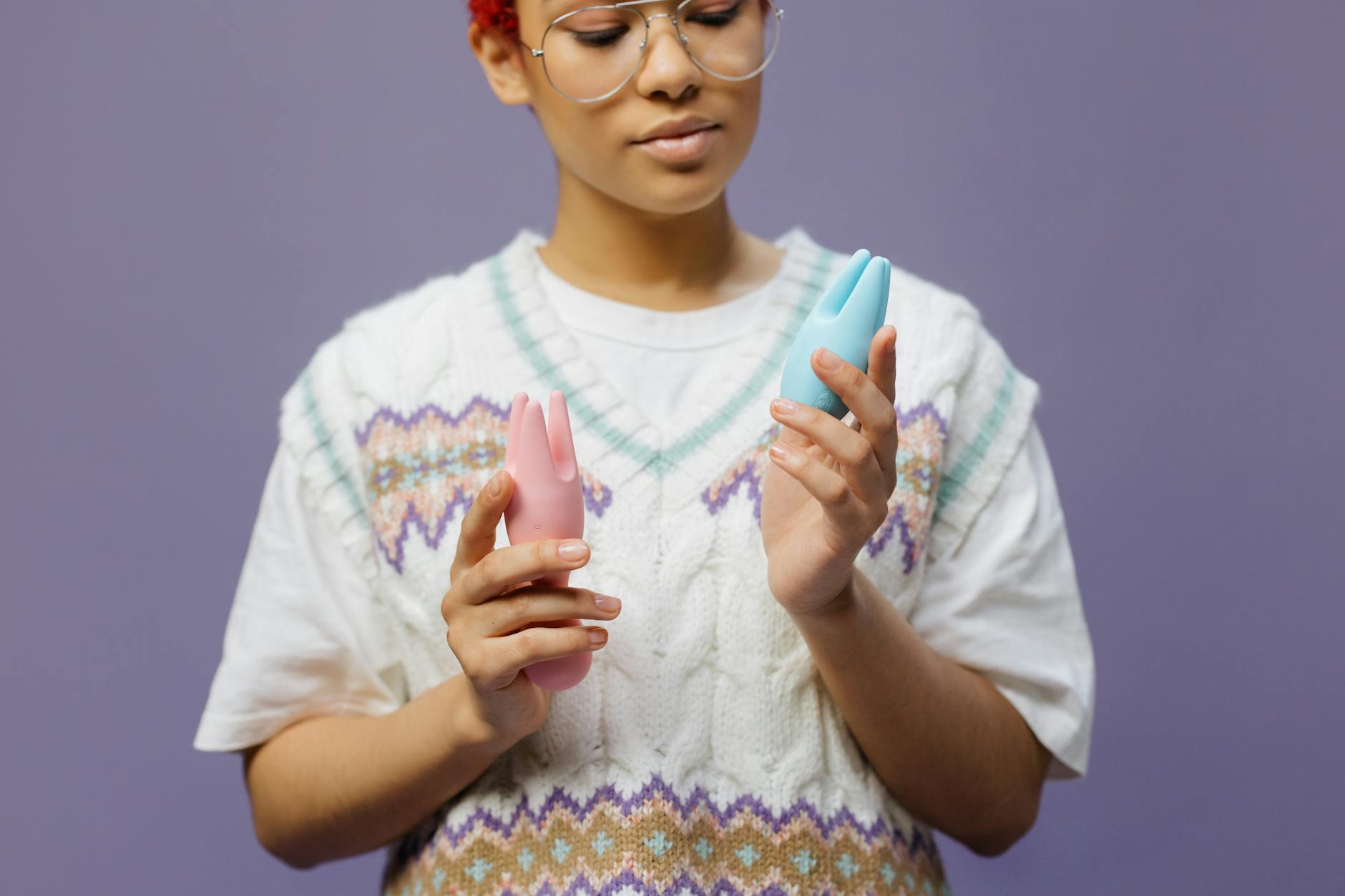
Why Lemon Vibrators Take Longer to Build Sensation With Partners
Your lemon clitoral vibrator works beautifully solo. With a partner present, sensation can feel slower to arrive. Here's what's actually happening, and how to shift it.
Here's the thing: a lemon vibrator that brings you to climax in solo play can feel weirdly sluggish when a partner is in the room. You reach for it. Turn it on. Wait. And wait. The suction that usually floods your nervous system seems to take forever to build momentum. You start wondering if something's broken. It's not. What's broken is the assumption that partnered pleasure works the same way solo pleasure does.
When you're solo, your nervous system is already primed. You've chosen the moment. You've set the environment. You're in charge of every variable. Your brain is focused. Your pelvic floor isn't bracing. When you turn on a lemon vibrator, the suction hits clean tissue and a nervous system already oriented toward sensation.
With a partner, even if you love them, something shifts. Your nervous system gets a little busier. Part of your attention goes to them. Part goes to what they're noticing. Part goes to performance. Even when you're not consciously worried about that, your body knows someone else is in the space. Your pelvic floor often tenses slightly. Blood flow redirects toward your brain (the one assessing social dynamics) instead of flooding your pelvis.
This isn't failure. It's physiology. Your body is doing exactly what it's supposed to do in a social situation.
Lemon clitoral vibrators use air-pulse technology. They work by creating a rhythmic suction pattern against sensitive tissue. That requires your nervous system to be receptive enough to register the sensation as pleasure instead of as pressure or distraction.
When your attention is split, your sensitivity threshold rises. You need more input to register the same sensation. A lemon vibrator on pattern 2 that makes you dizzy when you're alone might feel almost nothing when your partner is watching or participating. The device isn't weaker. Your nervous system's bandwidth is just allocated differently.
Add in the fact that many people breathe more shallowly when they're not alone (even if they don't realize it), and blood flow to the clitoris decreases further. Sensation gets muted. The lemon vibrator has to work harder, or rather, you have to help it by creating conditions in your nervous system where sensation can actually land.
Most couples don't talk about this. Instead, one partner assumes the other isn't turned on enough, or that they should just "relax" (a word that makes everyone tense). The person with the vibrator assumes they're doing something wrong. Both people end up frustrated.
The thing about pleasure is that it can't happen while you're monitoring yourself. If you're watching your partner's face to see if they're impressed, or if you're waiting for their cue to finish, or if you're running a commentary in your head about how long this is taking, your clitoris knows. It pulls resources inward.
This is where the dynamic shifts. The slowness isn't a problem with the lemon vibrator. It's a signal that your nervous system needs permission to be selfish. That's counterintuitive in partnered sex. We're taught that good partnered sex is generous, responsive, tuned to the other person. That's true. But generosity that doesn't include pleasure for yourself isn't generosity. It's performance.
First, start before they arrive. I don't mean a full solo session, but five minutes of sensation work with your lemon vibrator before your partner comes into the room wakes up your nervous system. When they arrive, you're not starting from neutral. You're already in the space. Blood is already flowing. Your clitoris recognizes the signal.
Second, change the framing. Instead of the lemon vibrator being something you use while they do something else, make it collaborative. That means they're not just watching. They're participating. They might be touching you elsewhere, or they might be physically closer, or they might be narrating what they notice. The difference between "I'm using a vibrator while you're present" and "we're using a vibrator together" is enormous neurologically. When pleasure is collaborative, your nervous system doesn't code it as performance. It codes it as connection.
Third, breathe. This one sounds corny until you actually do it. Most people hold their breath during partnered pleasure without realizing. A slow exhale every five seconds drops your nervous system into parasympathetic mode (the relaxed, sensory mode instead of the alert, social mode). More oxygen to the tissue. More sensation available.
You can also ask your partner to slow down their own breathing to match yours. When two nervous systems synchronize through breath, sensation deepens across the board.
This isn't a either-or situation. Solo pleasure with your lemon vibrator serves a different function in a relationship than partnered pleasure does. Solo sessions keep your nervous system calibrated. They remind your body what full sensation feels like. They let you practice without the attention-split.
Then when you bring that knowledge back to partnered play, you know what speed and pattern your body is actually looking for. You can guide your partner. You can use the vibrator with more intention because you're not figuring it out in the moment.
If you're working with a partner and sensation is taking longer than you'd like, one session alone with your lemon vibrator and a clear intention (noticing what patterns feel strongest, what positions make sensation easiest, what breath pattern helps) gives you data for the next partnered session.
Here's what I see people do: they assume that if a lemon clitoral vibrator works fast during solo play, it should work just as fast with a partner. Then when it doesn't, they either shame themselves for being slower with a partner, or they blame the vibrator, or they avoid using it in partnered contexts altogether.
None of that's helpful. Different contexts create different nervous systems. Your body isn't broken. Your attention is just distributed differently. Once you work with that instead of against it, a lemon vibrator becomes even more effective in partnered sex than it was solo, because you're using it with full knowledge of what your body actually needs.
The fastest way to change sensation speed is to talk about it beforehand. Not during, not after, but during a calm moment when neither of you is trying to be intimate. Say something like: "I notice my body responds faster when I'm alone. That's not about you, it's about how my nervous system works. I'd like to try [breathing together / starting before you arrive / being more collaborative with the vibrator]."
When a partner understands it's physiology and not preference, the dynamic shifts. They stop interpreting slowness as disinterest. You stop feeling pressured to perform speed. Both of you can actually focus on sensation building instead of sensation anxiety.
For couples who've been together a long time, this conversation often opens a larger door. Because the truth underneath the slow sensation is sometimes just that you've stopped creating space for pleasure together. The lemon vibrator becomes a tool for rebuilding that, not just a device for faster climax.
They don't feel weaker because they're actually weaker. Your nervous system's attention is divided, which raises your sensation threshold. You need more stimulation to register the same feeling. This is normal and fixable through breath work, starting with solo sensation first, and reframing how you use the vibrator together.
No. Solo and partnered play serve different purposes. Solo sessions help you understand what your body needs. Partnered sessions, once you adjust for the attention-split, often create deeper pleasure because they layer in emotional connection. Keep both.
Not at all. Sensation speed differences are a feature of how nervous systems work under attention, not a sign of incompatibility. Every couple experiences this to some degree. The ones who move past it are the ones who talk about it and adjust their approach.
With breathing and some intentional setup, most people notice faster buildup within one or two sessions. If you start 5-10 minutes before your partner arrives, even faster. It's not about waiting longer. It's about creating conditions where your nervous system can actually receive sensation.
Absolutely. The most effective approach is collaboration. They might touch you elsewhere, narrate what they notice, synchronize their breathing with yours, or simply be more physically close. When your partner actively participates instead of passively watching, your nervous system codes the experience as connection rather than performance.
That varies by person, but generally, lower patterns (1-3) with longer warm-up time work better than jumping to high intensity right away. The goal is to build sensation gradually while your nervous system settles into the space. Ask your partner to help you explore which patterns feel best when you're together.
Lemon clitoral vibrators are designed to work beautifully with partners. But your nervous system isn't the same person alone versus in relationship. Once you understand that and stop fighting it, you can use that knowledge to build sensation faster, deeper, and more sustainably than you could before. The vibrator isn't the limiting factor. Your attention is. Change that, and everything changes.
If you'd like to explore more about how to deepen pleasure in your relationship, we're here to help. Reach out through our contact form to learn more about resources and guidance tailored to your situation.