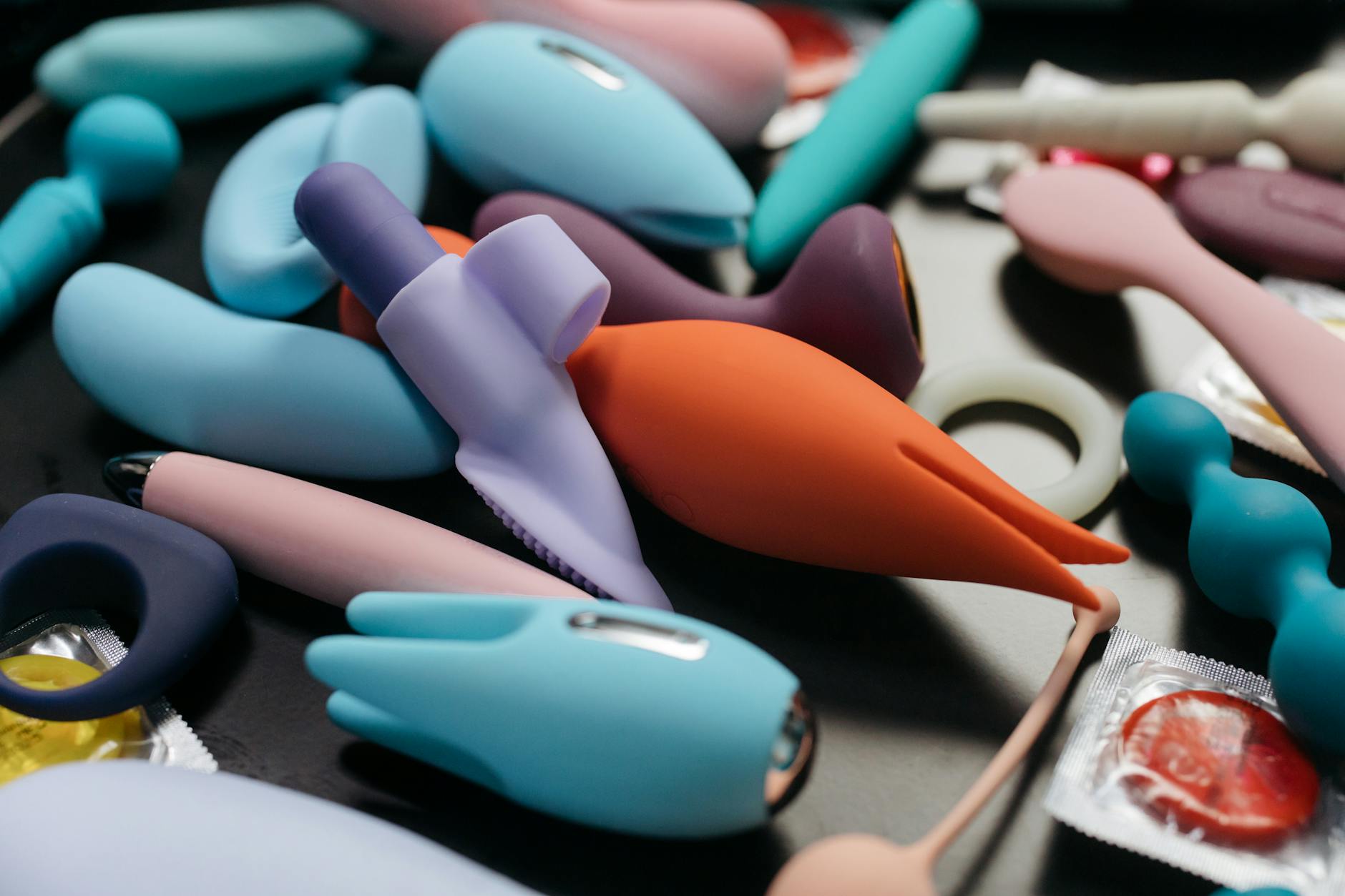
How Couples Use Lemon Vibrators Together: A Practical Guide
Here's the thing about introducing a lemon clitoral vibrator into couples' play: it's not actually the conversation you think it'll be.
Most couples I work with assume it's going to feel like a negotiation, or worse, a critique. "Your hands aren't enough." "I want something different." But that's almost never how it lands when you frame it right. A vibrator isn't a replacement. It's an addition. A tool. And honestly, tools tend to bring people closer together, not further apart.
The real reason couples are hesitant
It's not actually about the vibrator. It's about what they think introducing one means.
Partners without vulvas often worry: "Does she want this because I'm not doing it right?" Or worse: "Is she leaving me for a vibrator?" Partners with vulvas worry about seeming too demanding, or looking like they're staging a complaint dressed up as a fun idea.
Neither of those worries reflects reality, but they're real enough to keep people quiet for years. I've had clients in otherwise strong marriages tell me they've never mentioned vibrators because they thought the suggestion would hurt their partner's feelings or invite judgment.
Here's what actually happens when a couple brings a clitoral vibrator into their intimate life: pleasure increases, communication gets better, and most report feeling closer, not further apart. That's not magical thinking. It's just what happens when you add a tool that works, and you talk openly about using it.
The opening move matters more than the object
Don't do it mid-sex. That's not the moment to introduce anything new.
Pick a normal time. Sitting on the couch. Having coffee. Somewhere you'd talk about anything else. The script I suggest is dead simple: "I've been curious about trying something, and I want to talk about it with you." That's it. No apology. No elaborate justification.
Your partner's first response will probably be a question: "What?" Then you say it. "A vibrator. Specifically for me, during sex. I think it would feel really good, and I wanted to explore it together."
Listen to what comes back. Often it's just logistics. "Okay, where would we get one?" Sometimes it's curiosity. "How would we even use that?" Occasionally there's some initial hesitation, but usually that melts when you acknowledge it.
What actually helps: removing the performance pressure
Here's the insight I want to give you that might change how you think about this.
Sex in long-term relationships often becomes a performance for the other person. The partner without the vulva is focused on "am I doing this right?" The partner with the vulva is focused on "am I taking long enough, or too long?" Everyone's in their head instead of in their body.
A lemon vibrator short-circuits all of that. When external stimulation is happening from a tool, not a person, something shifts. The person receiving can just be in sensation. The person not receiving can focus on intimacy, touch, closeness. You're parallel instead of serial.
I've had men tell me it's the first time they've felt their partner actually relax during sex, instead of performing. I've had women describe it as finally being able to stop managing someone else's ego and just have pleasure.
That's the actual gift of bringing a vibrator into couples' play.
How to use it together: the practical moves
There's no one way to do this, but here are the patterns that work for most couples.
Before you try anything, use it solo first. Spend a week or two exploring what your body likes. Different patterns, speeds, angles. You want to know what you're doing before you bring your partner into it. This also gives you confidence, which your partner will feel.
Start with external stimulation only. During foreplay, before penetration. The receiving partner can focus on touch and kissing while the vibrator is handling the clitoral work. No pressure on the penetrating partner to multitask or perform.
Keep hands and mouths in the game. The vibrator is doing one job. You're still touching, kissing, being present. This is not a replacement for partner contact. It's an addition.
Experiment with rhythm and layering. Some couples like vibration during penetration. Others prefer it before, to increase arousal and ease of entry. Some like it after, to help with orgasm. There's no right version. Just what feels good to you.
Most couples also discover that the vibrator becomes a shorthand for "I want a lot of stimulation." It's easier to say "can we use the vibrator tonight?" than it is to negotiate details mid-sex. It takes the guesswork out.
The communication upgrade you didn't expect
Here's what often surprises people: introducing a lemon vibrator into couples' play tends to open up other conversations about pleasure.
Once you've had one conversation about a vibrator, other topics become easier. "I actually prefer it like this." "Can we try this?" "I've been thinking about..." The floodgates don't open because you bought a sex toy. They open because you've modeled the conversation. You've shown it's possible to talk about desire without shame or performance.
I see it in my practice constantly. A couple brings in a vibrator. Six months later, they're talking about positions, timing, what's actually pleasurable versus what they thought they should be enjoying. Sex gets better because communication gets better.
If your partner is reluctant
Sometimes there's real resistance, and that's worth taking seriously.
Most of the time, if you give it room and don't push, hesitation softens. People need time to think. They're sitting with their own assumptions about what it means. A few days later, curiosity shows up.
If resistance stays, that's information worth exploring. Is it about the vibrator? Or is there something else underneath it? Sometimes what looks like reluctance about a toy is actually anxiety about intimacy, or a deeper hurt in the relationship that needs attention.
If that's what's happening, it might be worth talking to a couples' therapist. Not because something is wrong with your relationship. Just because you deserve professional support thinking through what's underneath the hesitation.
The practical specifics: which vibrator, what settings
I'm going to be straight with you: not all vibrators are created equal for couples' play.
You want something with distinct patterns, because variety keeps things interesting. You want something quiet enough that the sound isn't distracting from intimacy. And you want something intuitive to control. A lemon clitoral vibrator works well for this because the design is straightforward, the vibration is strong without being overwhelming, and it's discreet enough to feel like an intimate tool, not a medical device.
Start with lower settings. Your nervous system will tell you what feels good. Most people end up using medium range during partnered play, not maximum.
Also: keep a water-based lubricant nearby. Vibrators work better with some slip. It changes the sensation and makes everything feel smoother.
The myth you can let go of right now
You do not have to be embarrassed. You do not have to be shy about ordering it or using it.
A vibrator is a normal tool in adult relationships. Your partner probably won't be shocked. Your sex life probably isn't broken. You're just choosing to add something that amplifies pleasure. That's it.
Most couples who introduce vibrators into their intimate life report the same thing: it normalized pleasure, deepened communication, and made sex feel less like a performance and more like something you do together.
If you're ready to have the conversation, have it. Your partnership will handle it. And your pleasure is worth the small awkwardness of speaking up.
People also ask
Will using a vibrator together change our relationship?
Probably for the better. Couples who communicate openly about pleasure tend to communicate better about everything else. It's not magic, but it's a conversation that tends to strengthen intimacy when both partners are willing.
Is it normal for men to be nervous about vibrators in couples' play?
Completely normal. Most of that comes down to cultural messaging that suggests a man should be "enough," which is nonsense. A vibrator isn't about him. It's about her pleasure. Once he understands it's an addition, not a replacement, most men become curious and engaged.
Can you use a vibrator during penetration?
Yes. External stimulation during penetration works really well for many people. It requires some positioning coordination, but it's absolutely possible and something lots of couples enjoy. Start slowly and check in about what feels good.
What if my partner wants to use it but I'm unsure?
Take your time. Ask questions. The best approach is curiosity, not agreement right away. "How would you want to use it?" "What would that look like?" Often, talking through the specifics makes it feel less abstract and more manageable.
How do I know which vibrator is best for couples' play?
One with distinct settings, intuitive controls, and a design that's easy to position during partnered sex. A lemon clitoral vibrator checks all those boxes. Start there, and adjust based on what your body tells you.
Will a vibrator replace my partner?
No. It cannot. It has no hands, no presence, no emotional connection. What it can do is increase pleasure and reduce performance pressure. The intimacy still happens between the two of you.