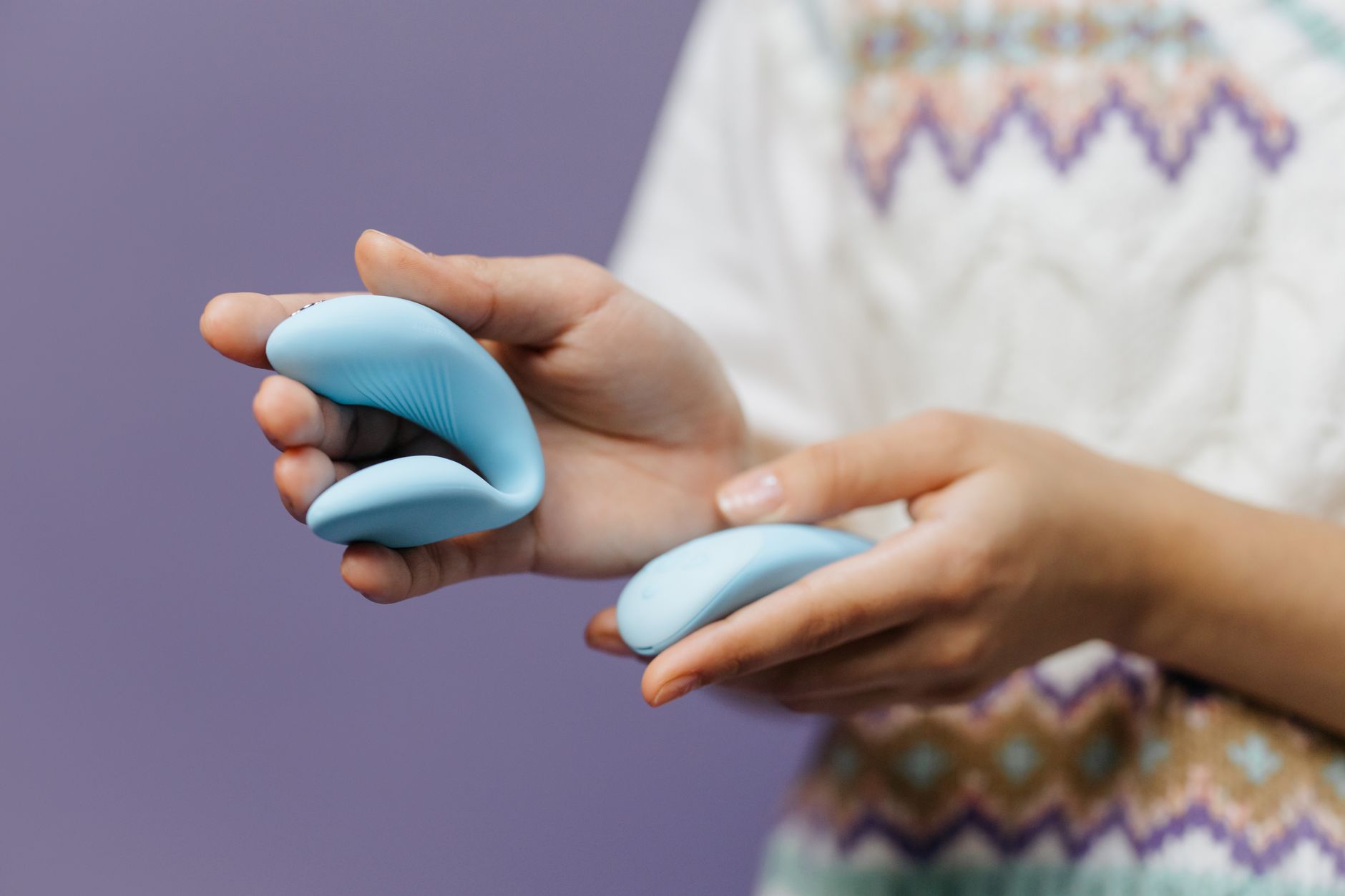
Let's talk about pain that shouldn't be there
Physical discomfort during sex is a signal. It's not something to push through, and it's definitely not a personal failing. When touch or penetration causes pain, soreness, or even just persistent low-level aching, your nervous system is telling you something needs to shift. The problem is that fear of pain often kills desire before your body even gets the chance to respond.
That's where a lemon clitoral vibrator changes the equation. By concentrating stimulation on the clitoris and away from sensitive internal tissues, lemon vibrators like the Lem let you experience pleasure without triggering the very discomfort that's been holding you back.
Why lemon vibrators feel different when touch hurts
A lemon clitoral vibrator uses suction and gentle pulsing rather than direct friction or penetration. This matters enormously when your body is tender. Traditional vibrators rely on vibration intensity traveling through whatever tissue they touch. Air-suction devices work differently. The Lem's gentle suction-and-pulse pattern stimulates the thousands of nerve endings clustered in and around the clitoris without requiring the kind of sustained pressure that can aggravate already-sensitive skin.
Clitorally-focused pleasure also sidesteps the main pain triggers. If your discomfort comes from penetration, internal pressure, or friction against tender vaginal walls, a lemon vibrator keeps stimulation external and localized. You get full-body arousal and powerful orgasms without ever entering the zone where pain lives.
Another reason lemon vibrators work: they put control entirely in your hands. You set the intensity. You pause when you need to. You build arousal at exactly the pace your body can handle right now, not the pace that was fine three months ago.
Understanding where the discomfort is coming from
Physical discomfort during sex has real causes. Before you start using a lemon vibrator, it helps to know which category yours falls into.
Shallow discomfort happens at the opening of the vagina or on the external tissues. This might feel like rawness, burning, or soreness. Shallow pain often responds well to gentler touch, extra lubrication, and slower warm-up.
Deep discomfort is pressure or pain felt higher inside the body during penetration. This sometimes signals pelvic floor tension, endometriosis, fibroids, or other structural issues. Deep pain benefits from being taken seriously and usually warrants a conversation with a gynecologist.
Generalized tenderness is harder to pin down. Your whole genital area feels sensitive or reactive. This can come from hormonal shifts, skin sensitivity, recent medical procedures, or even stress and anxiety triggering protective muscle tension.
Penetration aversion isn't exactly pain, but the anticipation of pain is so strong that your body tenses up reflexively, which then creates the very discomfort you were worried about. A vicious cycle.
Lemon vibrators help across all of these, but differently. With shallow discomfort or generalized tenderness, a lemon sucker is often the perfect tool because you're getting stimulation without any penetrative pressure. With deep pain, a lemon clitoral vibrator lets you experience pleasure and orgasm outside the painful zone entirely, which can actually reset your nervous system's fear response over time.
How to start using a lemon vibrator if touch feels risky
Go slow. That's the main principle. Your nervous system needs evidence that pleasure is safe before it fully opens up.
Step 1: Get familiar without pressure. Spend time just holding the Lem. Let it live on your nightstand. Touch it, feel the weight, learn where the power button is. Nervous systems calm down when things become familiar. No orgasm target, no performance expectation. Just acquaintance.
Step 2: Use it with clothes on first. Press it against your body over underwear or pajamas. Feel the vibration pattern without any direct contact. Many people find this stage incredibly reassuring because the layer of fabric creates a buffer and softer sensation. This is not a waste of time. This is your body learning that this device feels good.
Step 3: Introduce it to external tissue, no pressure to respond. When you're ready, let it make contact with your vulva without any expectation of arousal. Set it to the lowest pattern (usually pattern 1 on the Lem). Experiment for 2-3 minutes. See what sensations you notice. Does it feel warm? Tingly? Intense or gentle? Your job is observation, not performance.
Step 4: Extend sessions gradually. If the first session felt okay, try 5 minutes next time. If 5 minutes felt good, try 10. This gradual approach gives your nervous system time to recognize that this sensation means safety, not danger.
Step 5: Integrate lubrication. Water-based lube reduces friction and increases glide. Even if you don't have dryness, lube creates a smoother, less intense sensation. Apply it before you use the Lem. This is especially important if your discomfort involves rawness or any kind of friction sensitivity.
When to use lower intensity settings
The Lem has multiple patterns, but when you're managing physical discomfort, you're mostly interested in lower patterns and slower rhythms.
Patterns 1 through 3 are your friends. They're gentle enough that they won't aggravate tenderness, but they're powerful enough to create genuine stimulation and pleasure. Many people actually find these lower patterns more satisfying than the intense ones because sensation stays focused and doesn't overwhelm.
If even pattern 1 feels too intense, you can use the Lem through a thin barrier. A soft cloth between the device and your skin reduces intensity by about 30 percent without losing sensation. Some people keep a silk sleep mask or soft washcloth nearby for exactly this reason.
Don't rush to higher patterns. There's no achievement unlocked for reaching pattern 5. The point is pleasure that doesn't hurt. If pattern 3 feels amazing, stay there.
How lemon clitoral vibrators rebuild trust in your body
When sex has caused discomfort, your nervous system develops an association. Sex equals pain equals tension equals shutdown. Using a lemon vibrator in low-pressure, purely pleasurable situations helps rewire that association.
You're not treating the underlying physical issue. That might require a doctor visit. But you're simultaneously creating new neural pathways that say: stimulation can feel good. My body can experience pleasure. This device is safe. Arousal is possible.
Over several weeks of gentle, consistent use, many people find that their baseline anxiety around sex drops. They stop bracing. They start breathing normally again. And sometimes, the physical discomfort itself eases because a lot of it was amplified by fear and protective muscle tension.
This is why I often recommend solo exploration with a lemon vibrator before returning to partnered sex. You get to prove to yourself, privately and without any performance pressure, that pleasure is still there.
Partnered sex and communication when you're managing discomfort
If you have a partner, using a lemon vibrator becomes part of a conversation, not a workaround.
Tell them: "My body's been sore. I'm exploring what feels good right now with a toy designed for external stimulation. I'd like your presence while I do this, but I'm not ready for penetration yet."
That's it. You've separated the conversation into two clear pieces. One: I'm managing something physical. Two: I still want you in my pleasure journey.
Many couples find that lemon vibrators actually deepen connection during this phase because the focus shifts away from penetration and toward whatever sensation is available right now. Your partner watches you discover what works. They see you in pleasure. That's genuinely intimate, and it often feels less pressured than traditional sex.
When you do return to partnered penetrative sex, you'll do it from a place of embodied pleasure and confidence that your body can feel good. That changes everything.
The physical recovery timeline
Honestly, there's no universal timeline. Some discomfort resolves in weeks once you start addressing it. Some takes months. Some needs professional support.
But here's what does happen for most people: within two weeks of regular, gentle lemon vibrator use, the anxiety response starts to soften. Your body realizes that this specific stimulation is safe. Orgasms might come quicker. Recovery time shortens. You need less warm-up.
The physical healing (if that's what's needed) often happens in parallel. A gynecologist might recommend topical treatments, pelvic floor physical therapy, or other interventions. A lemon vibrator is not a replacement for medical care. But it's a powerful tool for pleasure during the healing process.
FAQ
Can I use a lemon vibrator if penetration causes sharp pain?
Yes, absolutely. A lemon clitoral vibrator keeps stimulation external and avoids the very area causing pain. That said, sharp pain during penetration usually means something specific is going on—endometriosis, pelvic floor dysfunction, vaginismus, or another treatable condition. See a gynecologist to rule out what needs medical attention. A lemon vibrator lets you experience pleasure while you're getting that sorted out.
What if the Lem feels too intense even on pattern 1?
Try using it through a thin barrier like a silk cloth or soft cotton. This reduces intensity without losing sensation. You could also try holding it further away from your body, letting just the outer edges of the suction cone make contact. Some people also find that applying pressure to surrounding tissue (not the clitoris itself) helps them experience the sensation as gentler.
How often should I use a lemon vibrator if I'm managing discomfort?
Start with 2-3 times per week for about 5-10 minutes each session. This gives your nervous system a chance to get familiar without overloading it. You can increase frequency once you're confident that the experience feels consistently good. Daily use is fine if you want it—there's no risk of desensitization with gentle, pattern-varied use.
Will using a lemon vibrator alone prevent me from enjoying partnered sex again?
No. Solo pleasure with a lemon vibrator is actually preventative. You're keeping your nervous system's pleasure response active. You're not creating any weird associations. You're just experiencing joy on your own terms. When you're ready to partner again, you'll do it from a place of embodied confidence, not fear.
Is it normal to need lube even if I'm aroused?
Completely normal, especially if you've had discomfort. Reduced lubrication happens for lots of reasons: hormonal changes, medications, stress, even the way anxiety affects blood flow. Using lube isn't a sign something's wrong with you. It's a practical tool that keeps sensation smooth and reduces friction that might trigger discomfort.
When should I see a doctor about the discomfort instead of using a toy?
If pain is sharp, sudden, accompanied by bleeding or discharge, or if it's gotten worse over time, absolutely see a gynecologist. A lemon vibrator is a tool for pleasure during healing, not a replacement for medical evaluation. You deserve both the evaluation and the pleasure.
The bottom line
Physical discomfort shouldn't steal your sexuality. A lemon clitoral vibrator is designed for external pleasure, gentler stimulation, and giving your nervous system evidence that sensation can feel good. Used thoughtfully, it's a way back to pleasure that honors where your body is right now, not where you wish it were.
If you're ready to explore, start slow. Pattern 1. Lube. No pressure. Your body knows how to feel good. Sometimes it just needs the right tool and the right pace.