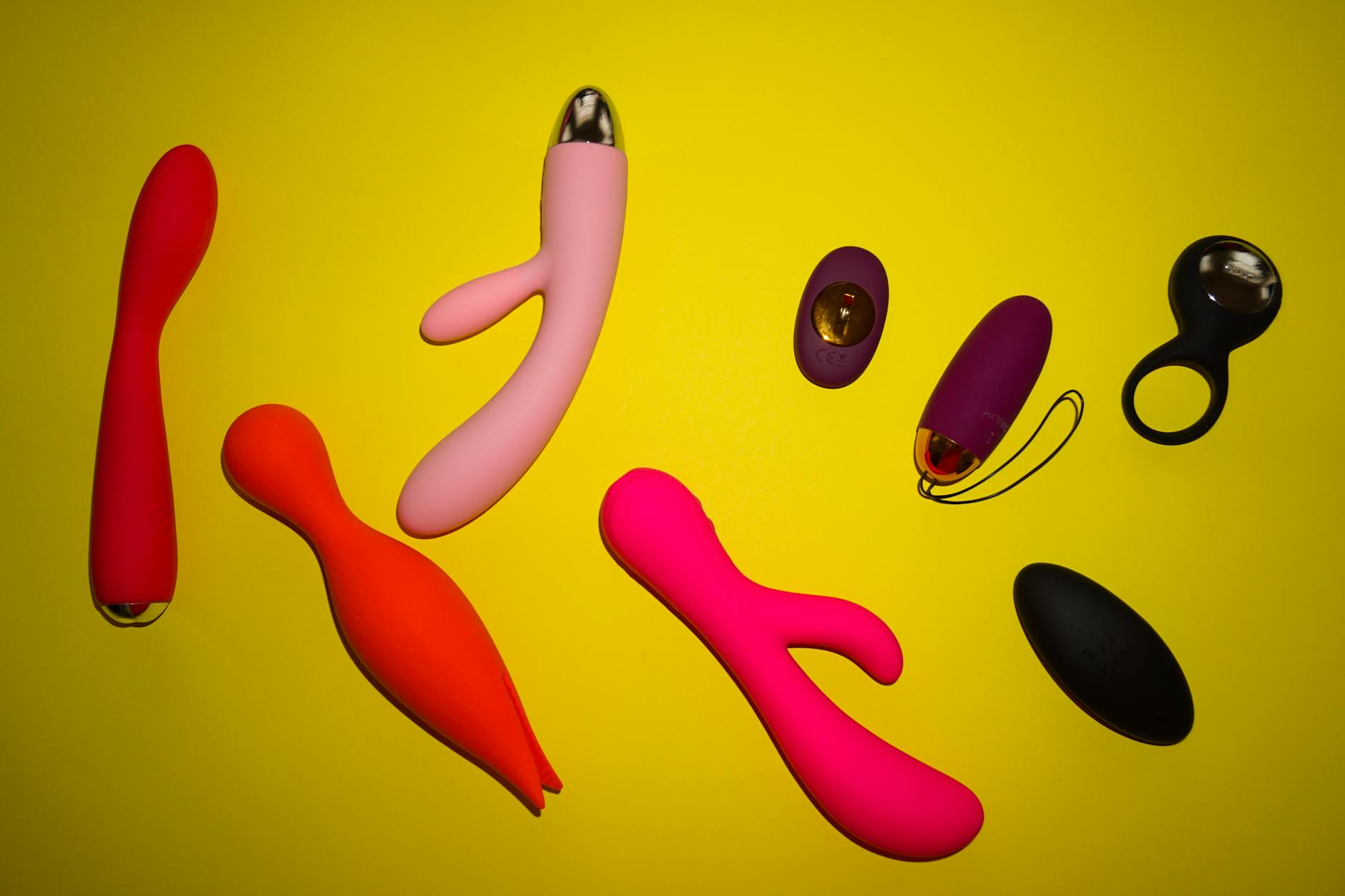
Here's the thing about restarting sex after a long pause
Your body hasn't forgotten how to feel pleasure. But your mind has probably created a story about why you stopped in the first place. Maybe it was illness, grief, medication, a relationship rupture, or just life getting so loud that sex became something you could no longer access. Whatever the reason, the gap between then and now has a weight to it. And that weight is what actually needs unpacking before your body can relax enough to feel anything at all.
I work with couples who are coming back to sex after anywhere from eight months to eight years. The physical mechanics are usually less of the problem than the psychological permission slip. So let's address both.
Why the body feels different (and what's actually happening)
When you haven't had sex in a while, the nerves in the vulva get less traffic. That doesn't mean they've stopped working. It means they need a slow reintroduction. Think of it like waking a muscle that's been resting. You wouldn't jump straight into a sprint.
The clitoris has around 8,000 nerve endings concentrated in a space smaller than a pea. When arousal is dormant, those nerves become hypersensitive to direct pressure but sometimes sluggish to subtler stimulation. This is where lemon vibrators shine. The suction-based pattern of a clitoral vibrator like the Lem bypasses the threshold problem entirely. Suction doesn't press. It draws. And your nervous system recognizes that as completely different from touch.
Second, your baseline arousal tempo has likely shifted. If you haven't been having sex, your body isn't being primed regularly by anticipation, flirtation, or habit. That means the slow burn you might have relied on before might need to be longer now. Budget 20 to 30 minutes for the first few times, knowing you might not need all of it.
Third, fear lives in the body. If there's anxiety baked into restarting sex—worry about pain, worry about being judged, worry that you won't be "good" at it anymore—that tension literally closes the pelvic floor. A closed pelvic floor makes everything feel tighter, drier, less pleasurable. A lemon clitoral vibrator actually helps here because it short-circuits the performance anxiety loop. You're not proving anything to your partner. You're discovering what works for your body right now.
The psychological reset that has to come first
Before the vibrator, before the lubricant, before the logistics: you need to grieve the gap. Not dramatically. Just honestly. If you stopped having sex because of pain, loss, or disconnection, your body is holding that. Jumping straight into pleasure-seeking without acknowledgment is like trying to get a child to focus after they've just been scared. It doesn't work.
Here's what I recommend in my practice: have one conversation with yourself (or with your partner if you're coupled) about what the pause meant. Not to solve it. Just to name it. "We stopped having sex when things got difficult between us." Or "Sex felt impossible when I was depressed." Or "I didn't feel safe in my body." Once that's articulated, something shifts. The body recognizes that you're not trying to erase the break. You're just choosing to move through it.
If you're with a partner, this conversation ideally happens outside the bedroom. Fully clothed, no agenda except truth-telling. You might say: "I'm ready to rebuild this part of us, and I'm also nervous about it. I might be awkward or need things to be slower." Your partner might say: "I want this too, but I'm worried about doing it wrong." That's the honest starting place.
Then, only then, you bring tools.
How to actually restart: the three-week framework
Week One: Rediscovery, solo. This is about you and your body, alone. Use a lemon sexual toy like the Lem on the lowest setting, in a comfortable space where you won't be interrupted. The goal is not orgasm. The goal is sensation. Notice what patterns feel good, what intensity makes you tense up, where your mind goes. This is information gathering. You might feel awkward or detached at first. That's normal. Keep showing up. By day three or four, your nervous system relaxes slightly and things start to feel less like an obligation and more like exploration.

Photo by Diana ✨ on Pexels
Week Two: Introduction to partnered touch (no penetration). If you're coupled, this week is about being skin-to-skin again without sex being the goal. Lying together, maybe some kissing, some hand touching. If you're solo, skip this and move to week three. The point is to remind your nervous system what safe touch feels like. For many people coming back after a long break, the biggest fear is that sex will be awkward or that they'll have forgotten how to be vulnerable. Partnered touch without the pressure of sex actually rebuilds that vulnerability foundation.
Week Three: Bringing the lemon vibrator into partnered play (if applicable). By now, your body has some baseline arousal capacity and your mind has less catastrophizing in the background. This is when you introduce the Lem into the shared experience. You might use it on yourself while your partner is present, or they might use it on you (communicating every step, no surprises). This isn't about intensity. It's about showing your body and your partner that pleasure is something you can access again.
The practical adjustments that make all the difference
When you're restarting sex after a long break, context matters more than technique. Here's what I always recommend:
Set a timer for the first few sessions. Not because you want to rush, but because knowing you have 30 minutes takes the pressure off. You're not trying to "succeed" at sex. You're just having a window of time to explore. When the timer is part of the agreement, your brain stops catastrophizing about "what if this takes forever."
Use water-based lubricant from the start. You don't know yet if your natural lubrication has changed. Using lube from the beginning removes that variable and lets you focus on sensation instead of worrying about friction. Hallo Nancy Lem products are designed to work beautifully with water-based lubes, and starting generous means you never have to stop midway to figure it out.
Start at the lowest vibration pattern. The Lem vibrator has multiple intensity settings. Many people coming back to pleasure assume they should jump to medium or high. Don't. Low feels almost impossibly subtle the first time. And that's exactly what nervous systems need. You can always increase. You can't unsimulate.
Choose a time when you're actually rested. Sex after a long break is not something to squeeze in at 11 p.m. on a Wednesday when you're running on fumes. Your body needs baseline wellness to access pleasure. That means morning, or an actual evening where you're not depleted.
Stop if you get frustrated or disconnected. If you use the lemon vibrator for 15 minutes and it feels weird or wrong, stop. This isn't failure. It's data. Your body is telling you something. Maybe you need more time to warm up. Maybe you need a different position. Maybe you need to talk through something with your partner first. Listen to that information instead of pushing through.
Why a lemon clitoral vibrator makes this easier
The reason I recommend lemon adult toys specifically for people restarting sex is the sensation model. A traditional vibrator relies on speed. A lemon sexual toy uses suction, which is actually closer to how oral sex feels. That matters because suction stimulates the entire clitoral complex, not just the tip. For someone coming back to pleasure after a long break, that fuller stimulation often feels less jarring and more intuitively pleasurable than point-specific vibration.
Second, lemon vibrators are quiet. When you're navigating vulnerability and potential self-consciousness, a device that sounds like a minor jet engine adds unnecessary psychological friction.
Third, they're genuinely intuitive. You're not trying to figure out angles or pressure. You position it and let the suction do the work. That simplicity means your mind can stay with sensation instead of logistics.
The emotional checkpoint nobody talks about
Sometime around week three or four of restarting sex, something unexpected often happens. You might feel sadness. You might feel angry at the time you "lost" or at whoever or whatever created the gap. You might feel grief that your body isn't exactly as it was. That's not a sign that restarting sex was a mistake. That's actually your nervous system integrating the break and your body's transition back into pleasure.
In my practice, I normalize this. I tell people: "You might cry during an orgasm. You might feel rage. You might feel nothing at all for a while, and then suddenly feel everything. None of that means something is wrong."
Let those feelings be there. They're part of reconnection.
FAQ: Your questions about restarting sex after a long break
How long does it usually take to feel "normal" again sexually after time off?
There's no standard timeline. Some people feel baseline sensation returning within two to three weeks. Others need two to three months. What matters is consistency, not speed. Showing up regularly to your own pleasure, even in small ways, reestablishes the neural pathways faster than sporadic attempts. Think of it like rebuilding strength after illness. It's gradual, and that's the whole point.
Is it normal to feel numb or disconnected during the first few attempts?
Completely normal. Your nervous system has been in conservation mode. It takes time to wake up. That numbness often drops away faster if you're solo first (because there's zero performance pressure) and if you use a lemon clitoral vibrator (because the sensation model is different enough from what you might have experienced before the break).
Should I tell my partner what I'm nervous about before restarting sex?
Yes. Not in a way that builds dread, but honest sharing actually rebuilds trust much faster than pretending everything is fine. Something like, "I'm excited to reconnect, and I'm also a bit nervous about whether my body will respond the way it used to." That opens the door for your partner to reassure you or share their own nerves. Shared vulnerability rebuilds intimacy faster than sex itself.
What if I still don't feel aroused after several weeks of trying?
That's worth exploring with a professional. Sometimes persistent arousal difficulty after a break is relational (you need to address something with your partner). Sometimes it's medical (medication side effects, hormonal changes). Sometimes it's trauma-related. A therapist or sex educator specializing in this can help you distinguish between the different causes and point you toward the right kind of support.
Can a lemon vibrator help if I have touch anxiety or trauma?
Yes, often. Because suction is fundamentally different from direct touch, many people with touch sensitivity find lemon vibrators accessible in ways other toys aren't. That said, if you have significant trauma, a therapist trained in trauma-informed sexuality should be part of your journey. A vibrator is a tool, not a substitute for that deeper work.
Is it ever too late to restart sex after a break?
No. I've worked with couples who stopped having sex for 15 years and rebuilt something rich and surprising. Your body is never "too old" or "too long out." What changes is your relationship to permission, patience, and expectation. And honestly, that's often what makes restarted sex better than what came before.
The whole truth
Restarting sex after a long break isn't about proving anything to anyone. It's about reclaiming a part of yourself that matters. Your pleasure is not frivolous. It's not selfish. It's part of what makes you alive.
Your body has been waiting. It hasn't forgotten. And when you give it permission again, with patience and the right tools, something shifts. That's not metaphorical. That's neurology. That's what connection actually looks like when you stop forcing and start rebuilding.
Want support navigating the emotional or physical side of this transition? That's exactly what I'm here for. Reach out and let's talk through what would actually help right now.