
Let's talk about the timing problem nobody brings up
You're having sex. One of you is already there. The other is still in the warm-up phase, nowhere near the finish line. So you both freeze, anxiety kicks in, and suddenly it's no longer about pleasure. It's about performance. This is one of the most common problems couples never actually discuss directly, and it's solvable.
Orgasm timing differences aren't a sign of incompatibility or low attraction. They're biology. Age, medication, stress, hormones, and how your nervous system is wired all play a role. The problem isn't that you're different. The problem is that most couples try to sync their bodies like they're some kind of Olympic diving team.
Lemon clitoral vibrators change the equation. They let you both get to the finish line on your own timeline, together.
Why orgasm timing differences happen (and why it's not your fault)
Here's the physiology. People with vulvas typically need 20 to 45 minutes of stimulation to reach orgasm. People with penises average 2 to 10 minutes. That's not a flaw in anyone's body. That's just how the nervous system is structured.
Add in variables like medication, stress, relationship fatigue, or hormonal shifts, and the gap widens further. You might also have different arousal patterns. One partner might need mental focus to stay turned on. The other might be easily aroused but take forever to finish. One person might orgasm easily solo but struggle with a partner present.
All of this is completely normal. The issue arises when you try to force synchronization.
When one person feels rushed, they often grip harder, tense up, and paradoxically move further away from orgasm. When the other feels like they're taking too long, shame creeps in, desire drops, and the whole experience collapses. Now you're both stuck.
What lemon vibrators do differently in this scenario
A lemon clitoral vibrator like the Hallo Nancy Lem uses suction and gentle pulsing rather than direct vibration. For someone with a vulva, this is faster, more reliable, and less likely to numb the tissue over time. For someone with a penis, it's something they can use on themselves without needing their partner to do all the work.
The key difference: a lemon sucker takes the pressure off both partners to manually achieve orgasm together. Here's how:
If you're the one who finishes faster, you're no longer lying there waiting and watching for signs of progress. You can focus on sensation and connection instead of a timeline.
If you're the one who needs more time, you're no longer racing against your partner's arousal. You can take your full 30 minutes without guilt.
Meanwhile, the lemon vibrator keeps pleasure constant and doesn't get tired.
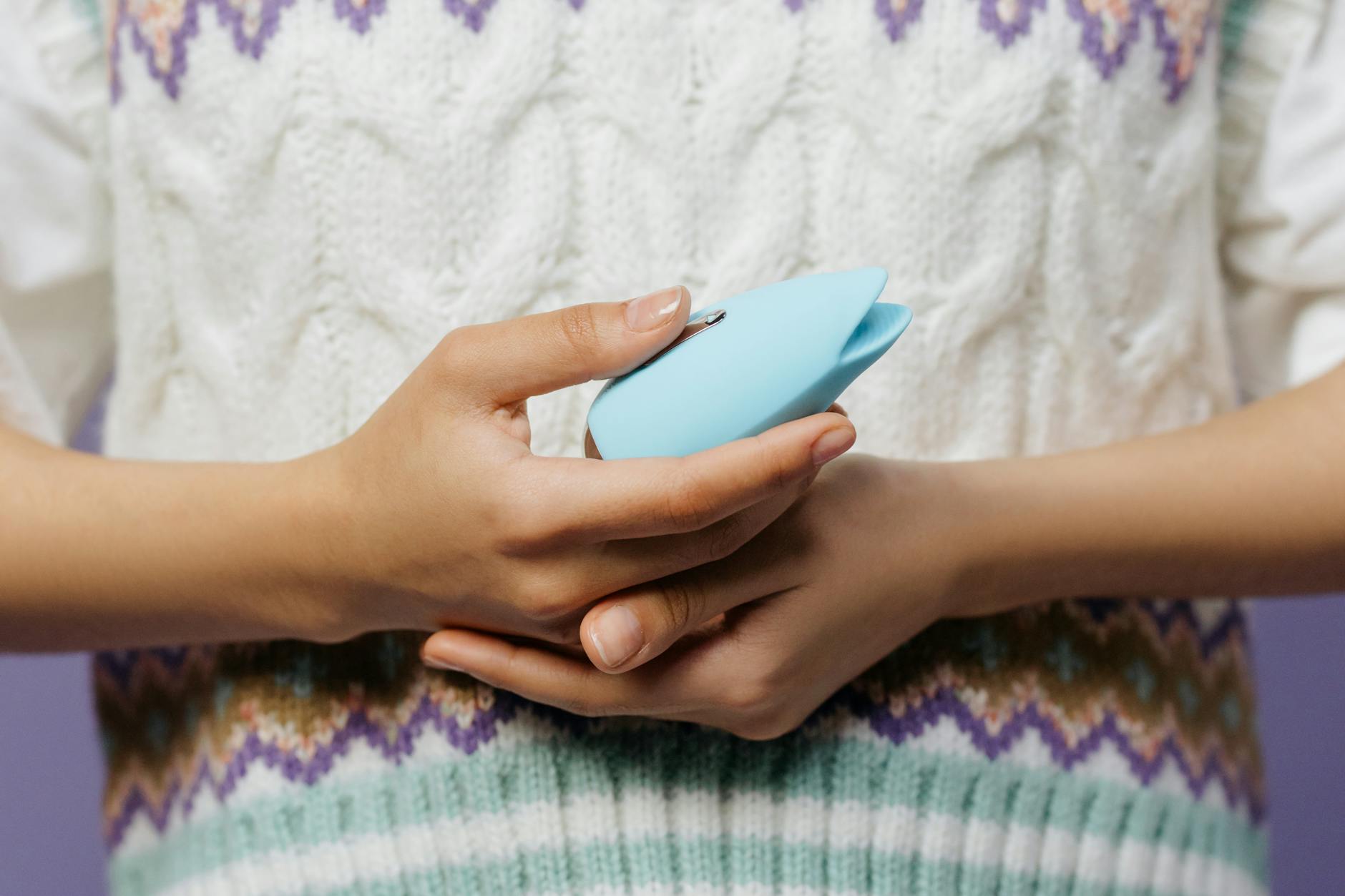
Photo by cottonbro studio on Pexels
The strategy that actually works
Stop trying to come at the same time. Seriously. That's your first move.
Instead, build a framework where both people can finish in whatever order makes sense. Here's what I recommend to couples in my practice:
Start with the slower partner. Whoever typically needs more time goes first, either solo or with their partner present. If they use a lemon clitoral vibrator, they'll reach orgasm faster and with less pressure than if they were relying on manual stimulation. That buys you something valuable: a reset point.
Then it's the faster partner's turn. Once the first person has come, the faster partner can focus on their own pleasure. If they use the lemon vibrator too, they get solo pleasure time. If they prefer partnered stimulation, you can focus on whatever works for them without watching the clock.
Or go simultaneous, but carefully. Some couples find that using a lemon vibrator on one partner while the other focuses on their own pleasure works well. The key is removing the expectation that both bodies must finish at the same moment.
The psychological relief is enormous. You're no longer comparing clock times or feeling like someone is "taking too long." You're both getting what you need.
Why this approach improves intimacy instead of replacing it
When couples first hear "use a vibrator together," some worry it means less connection. In reality, it's the opposite. The pressure to perform synchronously is often what erodes intimacy. Removing that pressure brings you closer.
You're also modeling something crucial for long-term partnership: the idea that different needs can coexist without shame or resentment. That's a skill that extends well beyond the bedroom.
Many couples find that taking turns with a lemon vibrator creates a new kind of vulnerability and attention. The partner who's watching isn't distracted by their own performance anxiety. They can actually be present, can pay attention, can notice what their partner enjoys. That kind of presence strengthens bond in ways simultaneous-orgasm-chasing never does.
Plus, there's something about watching your partner lose themselves in pleasure that's genuinely arousing. That arousal often carries forward, making the second person's turn even more connected.
Communication moves that matter more than the vibrator itself
Before you introduce a lemon vibrator into this dynamic, you need one conversation. Not a long one, but a real one.
Say something like: "I've noticed we sometimes feel rushed or out of sync during sex. That's normal, and I don't think it's a problem with us. But I'd like to try something that might make it feel less pressured for both of us. Would you be open to that?"
Then listen. If your partner has anxiety about toys, shame around their orgasm timing, or fear that using a vibrator means they're not "enough," you need to address that directly. Hallo Nancy Lem makes excellent lemon clitoral vibrators, but no vibrator solves communication gaps.
Also be clear about what you're trying: "This isn't about replacing what we do together. It's about both of us getting to feel good without watching the clock."
When orgasm timing might signal something else
If one partner is consistently unable to orgasm even with a lemon vibrator, or if one partner consistently finishes in under a minute regardless of circumstance, that might point to something worth exploring with a sex therapist or doctor. Premature ejaculation, anorgasmia, and delayed orgasm can all have physical or psychological roots.
A vibrator is a tool for pleasure, not a diagnostic device. If the timing difference is extreme or causing real conflict, that's worth professional support.
The practical setup
Honestly? Start with one partner using a lemon clitoral vibrator while the other is inside them or stimulating them manually. That way, the vibrator is adding sensation, not replacing connection. The person holding the vibrator can control the intensity and rhythm, giving them a sense of agency.
When the first person is close, they can usually tell you. Once they finish, you switch. Maybe that means the partner uses the lemon vibrator on themselves. Maybe they want manual stimulation. Maybe they want penetration. The point is, you're no longer locked into one simultaneous sequence.
Lube helps everything feel better, especially if you're using the vibrator for 20 to 30 minutes. Water-based lube is your friend here.
FAQ: Timing and Connection
Can using a vibrator actually help us feel more connected as a couple?
Absolutely. When both people stop performing and start focusing on sensation, presence increases. You're also showing each other that you care more about both of you feeling good than you do about hitting some arbitrary synchronization mark. That's intimacy.
What if my partner feels insecure about using a vibrator together?
That's valid. Bring it up outside the bedroom first. Explain that you're introducing the vibrator to reduce pressure, not increase it. Be honest about your own needs around timing. Sometimes a partner's resistance softens when they realize the tool is actually for their benefit too. If it doesn't, you might need a couples therapist to work through the insecurity.
How long should we plan for if we're doing this differently than before?
Budget 30 to 45 minutes total if both people want to reach orgasm. The first person might finish in 10 to 15 minutes with a lemon clitoral vibrator. The second person might take another 15 to 30. Build in time for transition, connection, and just being together without pressure. Rushing defeats the whole purpose.
Is it okay if only one person orgasms on any given night?
Completely. Not every session has to include orgasm for both people. Sometimes one person isn't in the headspace. Sometimes one person is tired. Once you stop treating simultaneous orgasm as the goal, you're free to have sessions where pleasure looks completely different night to night.
What if we've tried vibrators and it didn't help?
Then the timing issue might be secondary to something else. Stress, disconnection in the relationship, medication effects, or hormonal changes could all be at play. If a lemon vibrator doesn't shift things, it's worth talking to a sex therapist or your doctor.
How do we introduce this without it feeling awkward?
Start small. Maybe one partner uses the vibrator solo while the other watches. No pressure to incorporate it into partnered sex immediately. Let curiosity lead rather than pushing. Some couples find it helpful to frame it as "let's experiment" rather than "we need to fix something."
The real outcome
Mismatched orgasm timing stops being a source of anxiety and becomes just a normal part of your sexual landscape. You learn that your bodies don't need to do the same thing at the same time for the experience to be intimate. You learn to be present with your partner's pleasure instead of watching the clock. You learn that flexibility and adaptation are what actually build long-term sexual connection.
Lemon clitoral vibrators are excellent tools for that shift, but the real work is releasing the myth that great sex requires synchronized finishing lines. Once you do, everything gets better.