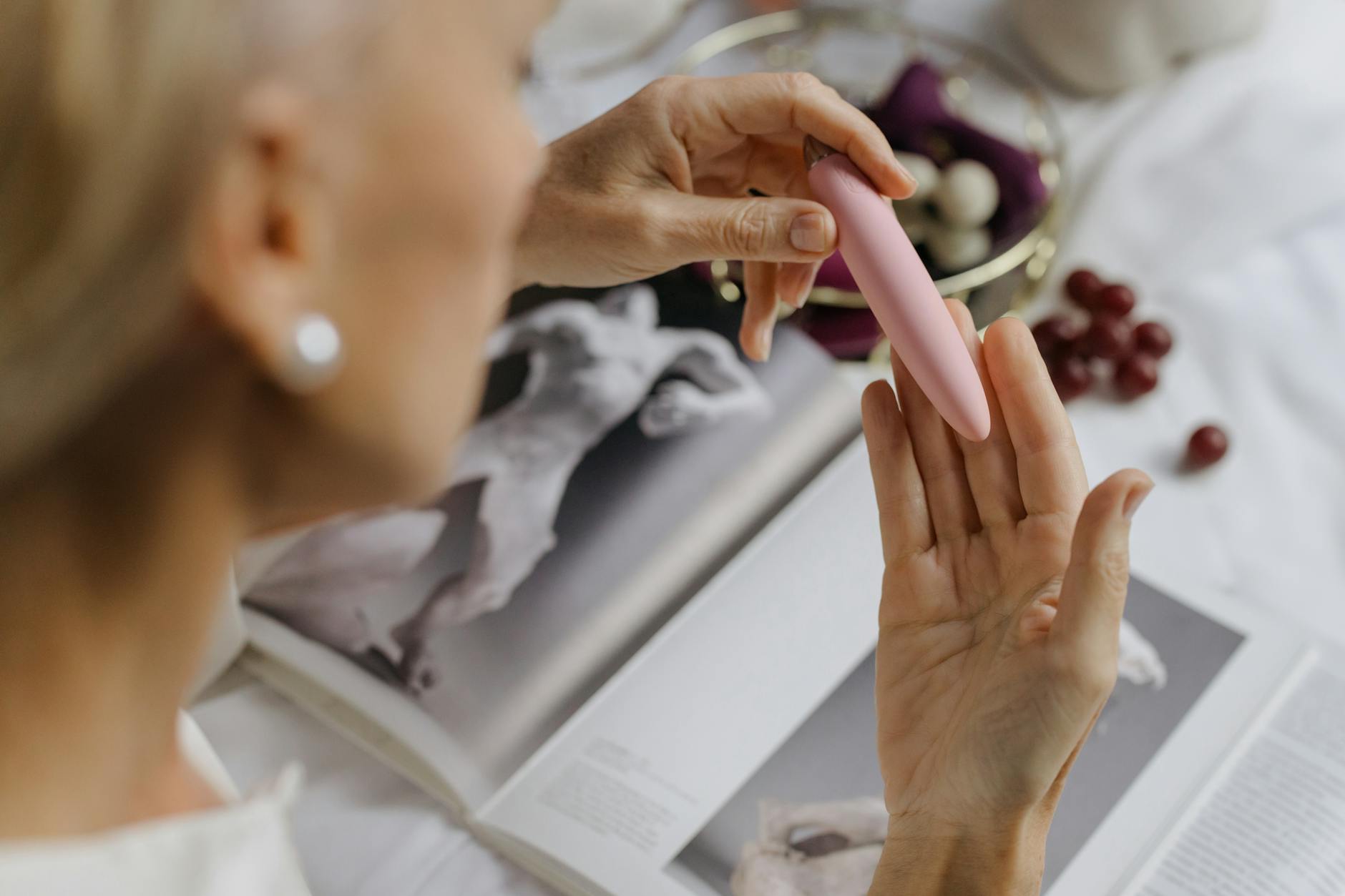
Anxiety doesn't mean broken. It means your nervous system needs a different approach.
Anxiety and arousal can't happen at the same time. Your brain literally can't flip both switches simultaneously. When you're anxious, your sympathetic nervous system (fight-or-flight) is screaming, and that shuts down the parasympathetic response (rest-and-digest) that arousal needs to build. So you're not failing at pleasure. Your system is just locked in the wrong mode.
The frustrating part isn't that arousal stops. It's that willpower doesn't fix it. You can't think your way out of anxiety-blocked desire. But what you can do is bypass the thinking brain entirely and speak directly to your body. That's where lemon vibrators become a game-changer.
Why traditional vibrators fail when you're anxious
A wand vibrator needs your body to ramp up gradually. You're supposed to notice sensations, build tension, track your arousal climbing. But if anxiety is active, your nervous system is too busy running threat detection to notice subtle sensation. You end up chasing the feeling, getting more frustrated, and spiraling deeper into anxiety. It's a terrible feedback loop.
Lemon vibrators work differently. The suction mechanism creates immediate, unmistakable sensation. You're not waiting for arousal to build or guessing whether what you're feeling counts as pleasure. The suction pressure happens, your body responds, and suddenly you have a concrete sensation to anchor to instead of the spinning thoughts in your head.
This matters neurologically. When a strong, specific sensation arrives, your brain has to pay attention to it. The threat-scanning mechanism quiets just enough for arousal to slip in.
The nervous system reset that actually works
Here's what I see happen clinically. A person with anxiety sits down, turns on a lemon clitoral vibrator, and something shifts almost immediately. Not because the toy is magic, but because the sensation is forceful enough to interrupt the anxiety loop.
The first 30 to 60 seconds usually feels just like sensation. Not necessarily pleasure yet, just strong physical feedback. That's fine. Your job isn't to feel turned on instantly. Your job is to feel present in your body instead of lost in your head.
After about a minute, something clicks. The sensation becomes less scary and more interesting. Your breathing often deepens without you thinking about it. This is your parasympathetic system finally getting a word in. Once it's activated, arousal can start to build.
Four setup rules if anxiety is your pattern
Create total friction removal. Anxiety loves obstacles. So eliminate every single one you can control. Use lube even if you think you don't need it. Have water nearby. Turn off notifications. Close the door. The goal is zero reasons for your anxious brain to jump to "what if someone needs me" mid-pleasure.
Set a 15-minute window, not a goal. Anxiety intensifies when you're chasing an outcome. Instead, tell yourself you have 15 minutes to explore sensation. No orgasm required, no arousal threshold to hit, just presence. This removes the performance pressure that anxiety feeds on.
Start on the lowest setting. Counterintuitive, I know. You might think "go harder to cut through the noise faster." But starting low lets your nervous system acclimate gradually. Pattern 1 or 2 on most lemon vibrators is usually enough to get the sensation working without feeling overwhelming.
Do it when you're not exhausted. Fatigue and anxiety are partners. If you're already depleted, your nervous system is more reactive. Afternoon or early evening usually works better than late night when your defenses are down.
What to do if anxiety shows up mid-session
Sometimes your brain will try to drag you back into the spiral. You'll feel good for a moment, then a thought arrives: "Am I taking too long?" or "Is this working?" or "What if I can't finish?" Welcome to anxiety's greatest hit.
When this happens, most people stop and restart, which just teaches your nervous system that the spiral wins. Instead, keep the lemon vibrator running and shift your focus. Feel the pressure of the suction. Notice the vibration rhythm. Count your breaths. These are all micro-actions that tell your brain "we're here now, not in the worry."
If the spiral is too strong, it's okay to pause without stopping everything. You can remove the vibrator, breathe for 30 seconds, and come back. You're not failing. You're learning your nervous system's language.
Partner presence: helpful or not
If you have a partner, anxiety often comes with a secondary worry: "What if they judge me for being anxious?" or "What if they think I don't want them?" That's a different conversation than the physical anxiety response.
Most people I work with find solo exploration works better initially. With a partner present, even a loving one, there's a subtle pressure that reactivates threat-detection. You're monitoring their reaction, wondering if they're enjoying it, second-guessing what you're doing. That's not presence; that's performance anxiety with an audience.
Once you've reset your nervous system solo a few times and built confidence that the lemon vibrator actually helps, bringing a partner in becomes less fraught. Then they're joining something you already know works, not watching you try to fix something broken.
When to bring a therapist into this
If anxiety-blocked arousal is recent and connected to a specific stress (new job, relationship issue, health scare), the lemon vibrator strategy usually helps significantly within a few weeks. Your nervous system gets the proof that pleasure is still possible, and arousal starts flowing again.
But if anxiety has blocked desire for months or years, or if it's tied to trauma, then a lemon clitoral vibrator alone isn't the answer. You need someone trained in anxiety and sexuality to help your nervous system learn a broader reset. A sex therapist or trauma-informed counselor can teach you techniques that work across your whole life, not just during solo time.
Think of it this way: the lemon vibrator is a tool that works for anxiety-in-the-moment. A therapist helps you rebuild the foundation so anxiety doesn't hijack arousal as often in the first place.
The patience part nobody wants to hear
Your nervous system didn't lock up overnight. It's been building this response through repetition, stress, maybe criticism, maybe pressure from past partners, maybe just the general chaos of modern life. Unwinding that pattern takes time.
Expect progress to be nonlinear. One session with a lemon vibrator might feel amazing. The next might feel like nothing. That's not regression. That's your nervous system learning that it's safe to relax in this context. Learning is messy.
Stick with it for at least four or five sessions before deciding it's not working. Your brain needs repetition to relearn that this specific sensation is safe, that pleasure is available, that your body knows what to do.
FAQ: Anxiety and Arousal
Can anxiety make me feel numb even with a strong vibrator?
Yes. Dissociation is a common anxiety response, and it can make even intense sensation feel distant. If this happens, pause and try a grounding technique: name five things you see, four things you feel, three things you hear. Then return to the vibrator. You're teaching your brain that you can feel both the anxiety and the sensation at the same time.
Is it normal to feel guilty about needing help with arousal?
Very common, especially if you've internalized the idea that pleasure should be automatic. It isn't. Wanting to explore a lemon vibrator because anxiety interferes with arousal is completely reasonable. You're not broken. You're being strategic about your own pleasure.
Should I use anxiety medication before using a vibrator?
That's between you and your doctor. Some medications that reduce anxiety can also reduce sexual sensation as a side effect. If that's happening, there's often a dose or timing adjustment worth discussing. But never stop or change medication without guidance from your prescriber.
Can a partner trigger my anxiety even if I'm calm alone?
Absolutely. Partner anxiety is its own thing. The safety and security you feel in the relationship matters hugely. If partner presence consistently derails arousal even when you feel calm solo, how to use lemon vibrators with a new partner might be worth exploring, or talking honestly with them about what you need to feel comfortable.
Does using a lemon vibrator during anxiety eventually make me less anxious about sex overall?
Often, yes. Repeated positive experiences with arousal and pleasure can gradually reprogram your nervous system's association with sex. Instead of sex equals threat, it becomes sex equals safety. But this happens through consistency, not intensity. Regular, calm exploration matters more than desperate, intense sessions.
What if anxiety returns after I've had success?
Stress, hormonal changes, relationship shifts, or new life events can reactivate the pattern. This isn't failure. It's your nervous system responding to a real stressor. You now know the reset works, so you can return to it. Often it works faster the second time because your body remembers the pattern.
The real work happens between sessions
The lemon vibrator solves the arousal-right-now problem. But sustainable pleasure comes from how to use lemon vibrators when you have a partner with a lower sex drive and managing the underlying anxiety. That might mean therapy, stress management, better sleep, or honest conversations with your partner about what you need.
A lemon clitoral vibrator isn't a substitute for addressing anxiety in your life. But it's also not just a toy. It's evidence that your body still works, that pleasure is still possible, and that you're not broken. Sometimes that proof is what your nervous system needs to believe that things can change.