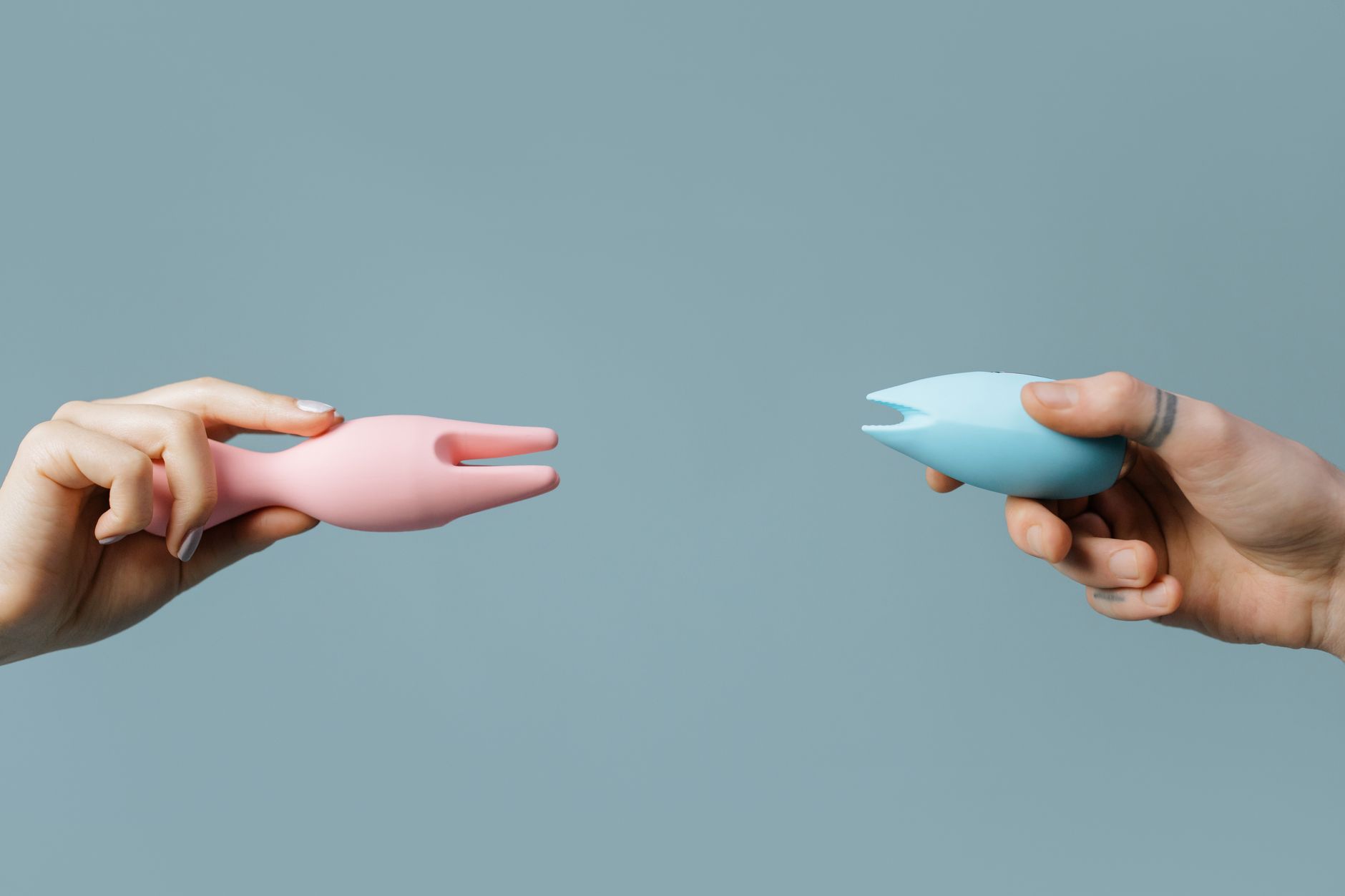
How to Use Lemon Vibrators for Better Orgasms After Hormonal Shifts
Let's be honest. Hormonal shifts mess with orgasms. Not in the way you've been told, but in ways that matter.
When testosterone drops, when estrogen fluctuates, when your cycle changes or you enter a new phase entirely, the pathway to orgasm rewires. The intensity changes. The sensation shifts. The time it takes to get there stretches. And most importantly, the tools that worked six months ago suddenly feel either too intense or not intense enough.
This is not a failure of your body. It's information. And once you understand what's happening, tools like lemon clitoral vibrators become wildly more effective because they work with your hormonal reality instead of fighting against it.
Why Hormonal Changes Actually Affect Orgasm Intensity
Orgasms are a complex chain of events. Hormones don't trigger them directly, but they set the stage. Testosterone in people with vulvas drives desire and sensitivity in the clitoral tissue. Estrogen affects blood flow and tissue elasticity. Oxytocin (the "bonding" hormone) amplifies sensation during pleasure. When these shift, the entire system recalibrates.
Here's what typically changes:
Clitoral sensitivity becomes more variable. Some days you feel everything. Other days you feel almost nothing. This isn't mood. It's your hormone levels fluctuating, which changes nerve responsiveness in the tissue.
Orgasms take longer to build. A shorter warm-up used to work. Now you need 20, 30, sometimes 40 minutes of consistent stimulation before your body catches up to your mind.
The sensation quality shifts. Instead of a sharp, intense peak, you might experience a broader, deeper wave. Some people find this more satisfying. Others grieve the old pattern.
Recovery time changes. You might be able to have multiple orgasms back-to-back, or you might need longer to reset between them.
None of this is permanent. But pretending it isn't happening only delays the discovery that your pleasure actually got better, not worse. It just looks different.
Why Lemon Vibrators Work Differently With Hormonal Shifts
Most vibrators work through direct friction or rapid vibration against sensitive tissue. This works beautifully when your baseline sensitivity is high. But when hormone levels shift, the same pressure can feel either overwhelming or insufficient.
Lemon clitoral vibrators, including the Lem, use suction and pulsing patterns instead of constant vibration. This is a crucial distinction after hormonal changes for several reasons.
Suction stimulates nerves without relying on direct friction. When tissue is thinner or less elastic (which happens with estrogen fluctuation), suction-based stimulation often feels more comfortable and produces stronger sensation than traditional vibration.
The pulsing rhythms mimic the actual nerve patterns your brain recognizes as pleasure. Your body doesn't need extreme force to interpret these pulses as arousing. This means you can get intense sensation without the physical pressure that might feel raw or uncomfortable on hormone-shifted tissue.
Pattern variety matters more with hormonal shifts. When sensitivity is variable, rigid single-note vibration can feel tedious. Lemon adult toys offer multiple patterns that you can cycle through, letting you follow your body's moment-to-moment responsiveness instead of fighting against it.
Adjusting Your Technique For Your Hormonal Baseline
Using a lemon vibrator well after hormonal shifts means learning three key adjustments.
Start at lower intensity and build slowly. If you're used to jumping straight to pattern 7, try starting at pattern 2 or 3. Spend 10 minutes there. Your nervous system needs more time to register sensation now. Let your body warm into deeper stimulation rather than forcing intensity upfront.
Pay attention to positioning. Hormone shifts can change exactly where on the clitoris feels best. Some people find the hood needs more direct contact after hormonal changes. Others need lighter side-to-side positioning. The Lem's suction design lets you move it around the tissue easily without breaking the stimulation, so experiment. What worked last year might not be the sweet spot anymore.
Lengthen your warm-up window. This is non-negotiable. Budget 20-30 minutes minimum. Use the lemon vibrator for part of that, but start with manual touch, a partner's attention, or even just mental focus. Your clitoris needs time to fill with blood, become engorged, and ready itself for peak sensation. Rushing this step will leave you frustrated.
Track which patterns hit during different cycle phases. If your hormones are still cycling (even if irregularly), you'll notice that pattern 4 felt amazing on day 10 of your cycle but felt pointless on day 21. This isn't random. Your body is telling you which frequencies your nervous system is most receptive to at different hormonal moments. Respect that data.
What to Expect When You Start Using a Lemon Vibrator Post-Hormonal Shift
First sessions can feel underwhelming. This is normal and doesn't mean the tool isn't working.
Your brain is used to a certain intensity signature. A lemon sexual toy produces pleasure through a different mechanism than you're accustomed to. It takes 3-5 sessions for your nervous system to learn this new language and for orgasms to build with the same inevitability you remember.
Some people find their orgasms actually feel more intense after a few weeks. Others report they feel different but not stronger. Both outcomes are legitimate. The intensity change is less important than whether the sensation feels good and whether you're having orgasms more reliably.
Don't compare to your pre-shift baseline. That's a trap. Your body is not broken. It's recalibrated. A post-hormonal-shift orgasm is not a failure version of your old orgasm. It's a different thing with its own quality and depth.
Why Partner Communication Matters More Now
If you have a partner, these shifts often affect partnered sex more than solo play. Here's why.
Your partner is probably operating from the old data. They remember what used to work and expect it to still work. It doesn't. So they either try harder (which can feel pushy when your sensitivity is lower) or they assume something's wrong (which creates anxiety and kills arousal).
The most useful conversation is not "I'm broken" or even "I need you to try harder." It's "My body is responding differently to stimulation now. Here's what I'm noticing. Here's what I want to try." Then use the lemon clitoral vibrator together as a tool to explore the new landscape, not as a band-aid for a "problem."
Many couples find that using a tool like a lemon vibrator actually deepens intimacy during hormonal shifts because it takes pressure off the partner to intuitively know what the body needs. Instead, you're both exploring together.
When to Reassess Your Approach
Three to four weeks of consistent use should tell you whether lemon vibrators are working for your current hormonal baseline.
If orgasms are building more reliably and feel satisfying, stick with it. Adjust intensity and patterns as needed, but you've found your tool.
If you're still struggling after a month, consider whether the hormonal shift might also benefit from medical support. Estrogen cream, testosterone therapy, or thyroid testing can all shift how your body responds to pleasure. A menopause-trained GP or functional medicine doctor can help you understand whether hormonal support would make a difference.
If the Lem isn't resonating, that's also data. Some people find suction-based stimulation works better than patterns they've never tried. Others need to return to a wand or a more traditional vibrator. Your body knows. Listen to it.
The Honest Truth About Orgasms and Hormonal Shifts
Hormones change pleasure. They don't end it. They don't make it less valid. They just require you to pay more attention, try different tools, and release the expectation that your body should work like it did before.
Many of my clients report that their most satisfying sexual experiences come after hormonal shifts. Once they stopped fighting their new baseline and started working with it, pleasure deepened in ways they didn't anticipate. Orgasms became less about intensity and more about full-body sensation. The speed mattered less. The texture mattered more. The partner's presence mattered more.
A lemon vibrator is one excellent tool for navigating this transition. But the real work is internal. It's letting go of what sex used to feel like and getting curious about what it feels like now.
People Also Ask
Can hormonal shifts permanently change how orgasms feel?
They can, but not usually permanently. Most hormonal shifts are cyclical or manageable with support. Even after major hormonal changes like full menopause, your capacity for pleasure doesn't disappear. It recalibrates. With the right tools and realistic expectations, many people find their orgasms return to their original intensity or even exceed it.
Is it normal for lemon clitoral vibrators to feel less intense than wand vibrators during hormonal shifts?
Absolutely. Wands deliver direct, forceful vibration. Lemon vibrators use gentler suction. During hormonal shifts when tissue sensitivity is variable, the suction approach often feels more sustainable and produces more reliable orgasms even if individual pulses feel less intense. The trade-off is usually worthwhile, but it takes adjustment.
How long does it take to adapt to a new stimulation style after hormonal changes?
Typically 3-5 sessions of 20-30 minutes each. Your nervous system needs time to learn new pleasure pathways. Be patient with yourself during this phase. Some people adapt in a week. Others need two or three weeks. There's no timeline you "should" be on.
Should I stop using a lemon vibrator if orgasms feel weaker at first?
No. Weaker sensation in the first few sessions is usually just your nervous system adjusting to a different stimulation frequency. Stick with it for at least a month before you decide it's not working. Often the "weak" sensation becomes very satisfying once your body learns the pattern.
Can I use a lemon vibrator during hormonal fluctuation if I'm also taking medication?
Yes, and it's often especially helpful. Some medications reduce sensation or make arousal harder to access. Lemon sexual toys' pulsing patterns can sometimes bypass these barriers more effectively than traditional vibrators. If you're concerned about specific interactions, ask your doctor, but most sexual wellness tools are compatible with psychiatric medications, hormonal treatments, and pain management.
What patterns should I try first with hormonal shifts?
Start with the slowest, gentlest patterns available. Most lemon clitoral vibrators have 7-10 patterns. Patterns 1-3 are your friends initially. You want your clitoris to warm into sensation gradually. Once you're aroused, you can experiment with faster or more complex patterns. Many people find that mid-range patterns (4-6) become their sweet spot after hormonal shifts.
If you're noticing changes in sensation or orgasm intensity, you're not alone. Many people find that approaching the shift with curiosity rather than frustration transforms the experience entirely. A lemon sexual toy is one tool in that exploration. If hormonal shifts are affecting your relationship or causing ongoing distress, reaching out to a therapist who specializes in midlife transitions can help immensely. Get in touch at /contact to talk through what you're experiencing.